Typed into google ‘poverty in the uk
Despite being a developed country, those who are living at the lower end of the income distribution in the United Kingdom have a relatively low standard of living.
Poverty affects millions of people in the UK. Poverty means not being able to heat your home, pay your rent, or buy the essentials for your children. It means waking up every day facing insecurity, uncertainty, and impossible decisions about money.
Key words
- Not being able to heat your home
- Pay your rent
- Buy the essentials for your chikdren
- Facing insecurity
- Uncertainty
- Impossible decisions about money
What causes poverty in the Uk?
- Wage inequality. …
- Job insecurity and part-time work. …
- Unemployment. …
- Economic inactivity Related to unemployment is economic inactivity. …
- Old age People over 65 have traditionally been more at risk of relative poverty, as pension incomes are significantly less than average incomes.
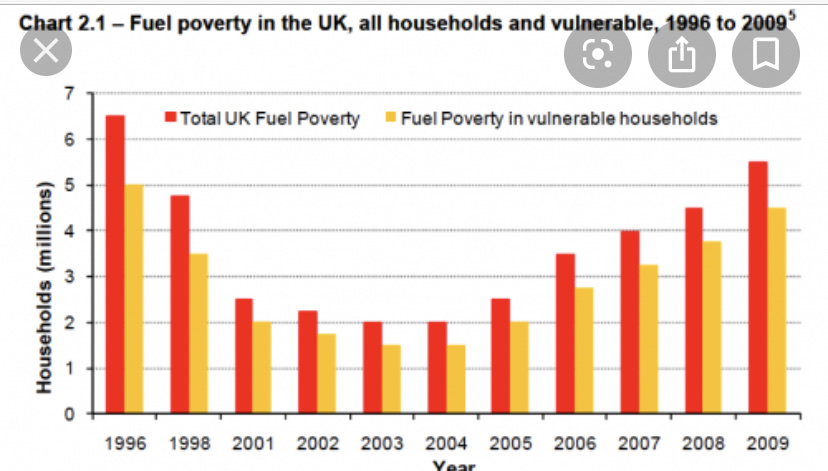
Knowing the poverty in. the UK and how it has increased over the years, I decided to look into a few case studies that indicate house hold poverty. The most ‘typical’ idea of being in poverty comes in 5 forms… (information taken from https://www.poverty.ac.uk/living-poverty/personal-experiences)
- single parents on benefits
- the young unemployed
- low-paid workers supporting a family
- adults who are disabled
- single pensioners.
Single parent poverty:
Being a single parent is hard enough, then being on the poverty line makes it 10 x harder. The first case study I looked into was a single parent named Jenny 39. Here is her story.
Jennie is 39 and unemployed. She lives with her three sons, all of whom have disabilities, in Redbridge, outer London. The family has lived in temporary accommodation for the last 12 years.
Jennie worked as a hairdresser when she left school and then switched to part-time work when she started a family. Her middle son, Mark, 13, contracted meningitis when a baby and Jennie left work to care for him. He is visually impaired and has Perthe’s disease, as a result of which he cannot walk long distances. Jordan, 16, has attention deficit hyperactivity disorder (ADHD) and Michael, 11, is also visually impaired with no peripheral vision.
When Jennie separated from her husband in 1999, the family moved to a women’s refuge, all four sharing one room for ten months. Since then the family has always lived in temporary accommodation, seven different homes in total. Jennie suffers from insomnia and stress.
For most of the children’s lives, the family has been poor. When filmed in late 2011, the family lived on £243 a week, excluding housing benefit but including jobseeker’s allowance, child benefit and child tax credit.
Single parent background: POVERTY
Single parent poverty
Single parent families are one of the groups most vulnerable to poverty. The 1999 PSE survey found that single parents were well over twice as likely as all households to live in poverty, with two out of three single parents living in poverty (see Poverty and Social Exclusion in Britain, Joseph Rowntree Foundation, 2000).
Single parents, working and non-working, are among the heaviest losers from the Coalition government’s tax and benefits changes. While some of those in work will gain from the raising of the tax threshold, most benefits for families are being frozen, cut or withdrawn. Jennie has been affected by the three-year freezing of child benefit rates from April 2011, and by changes in how inflation is allowed for in the jobseeker’s allowance, with annual adjustments being calculated using the Consumer Price Index instead of the faster rising Retail Price Index. Other families will be affected by:
- a reduction in the childcare element of working tax credit from April 2011
- the capping of housing benefit for existing claimants from April 2012
- the replacement of the social fund, and the localising and lowering of council tax benefit from 2013.
The Institute for Fiscal Studies, in a report commissioned by the Fawcett Society, estimates that lone mothers can expect to lose 8.5 per cent of their annual income by 2015 as a result of the government’s changes. This is three times the percentage amount the average childless couple will lose (see further details on the IFS website).
The poverty trap
Single parents with few qualifications and skills, and often with limited hours available for work, can often find the type of work they can get is so badly paid that they are little better off in employment than on benefits. Although successive governments have tried to tackle this problem and have put pressure on single parents to find work, the relative pay of unskilled, part-time jobs has fallen over the last 30 years, making it increasingly difficult for many single parents to find work that will lift them out of poverty. They remain caught in the poverty trap.
Homelessness
Homelessness is on the rise. Between 2010 and 2011, the number of families accepted as homeless by local authorities rose by 14 per cent, while recorded rough sleeping was nearly a fifth higher in Autumn 2011 compared with a year earlier (see Homelessness figures surge by 14 per cent).
The young unemployed:
My biggest fear is leaving university and being unemployed as it has risen over the last decade for young people. A case study I found was from a 19 year old jobseeker named Marc, Marc is 19 and lives in Redcar in north-east England, a town where there are twelve times as many people claiming job seeker’s allowance as there are job vacancies. Despite having passed a number of GCSEs and A-levels and having applied for hundreds of jobs over the last two years, Marc is still unemployed.
Youth unemployment
There are over one million young people under 25 who are without work – the highest figure since records began in 1992. Just over one in five young people are now unemployed, nearly three times the average rate. Long-term joblessness, especially among the young, brings a high human cost, often leading to a lifetime of intermittent and insecure low-paid work. There are currently 857,000 young people who have been out of work for over a year.
Jobseeker’s allowance
Since 1980, the value of this benefit has fallen by a half relative to average earnings.
Under the government’s new benefit rules, jobseeker’s allowance, along with a number of other benefits, will be annually adjusted for inflation in line with the Consumer Price Index (CPI) rather than, as at present, the Retail Price Index (RPI). The CPI rises more slowly than the RPI, effectively cutting the level of these benefits.
The government has run into controversy over moves to make young people work without pay or lose job seeker’s allowance (see Government revises its work scheme).
A low -paid worker
In the UK I feel as if this is the most common factor of poverty. Parents can work long hard hours but still not earn enough to support their family.
Renée is 40 and works long hours for low pay to try to provide for her four children, aged 3 to 14, and her 80-year-old mother. The three generations of the family share a damp and overcrowded three-bedroom council flat in Hackney, in inner London.
Background
Working families and the benefit changes
Nearly all working families on low incomes, both single parents and couples, will be affected by the government’s tax and benefit changes. While some will gain from the rise in the personal tax allowance, losses will arise from benefit changes, most significantly:
- a three-year freezing of child benefit
- adjusting for inflation using the Consumer Price Index rather than the Retail Price Index
- the faster withdrawal rate in tax credit as incomes rise
- a reduction in the levels of the childcare component of working tax credit
- making couples with children work at least 24 hours a week between them instead of the current 16 hours a week minimum
- the capping of housing benefit for private tenants.
Universal Credit, which is due to replace tax credits and most benefits from 2013, will hit poorer working mothers the hardest, according to a report by the charity Save the Children (see Welfare reforms could push 250,000 children deeper into poverty).
 ktwilliamsdesigns4BA