On Moodle there was a bunch of different tasks to undertake through this process through this blog I will focus on these activities. We had to look at each of these for us as a group to almost collect the ideas we wanted to achieve for the final outcomes and the topic. We kind of already had an idea in our head for the topics we was going to use however I did look into some of these links (not all due to time) I picked some of these that I personally felt were important and wrote notes on them, I did not think of writing notes for all however I did actually look into each specific one.
Changing the NHS
NHS Citizen (people and NHS decision-making) https://www.open.edu/openlearn/people-politics-law/politics-policy-people/participation-now/nhs-citizen


“NHS Citizen is a national programme to give the public a say on healthcare matters and influence NHS England decision-making. […] NHS England has commissioned four organisations to manage the NHS Citizen design process: The Tavistock Institute, Involve, The Democratic Society and Public-i. […] All four organisations are responsible for the delivery, engagement and operation of this website and the other project resources we’re developing, but are directly funded by – and answerable to – NHS England.”
It was initiated by government, designers & developers, non-governmental organisation/charity and researchers and encourages people to participate through an online platform, a public assembly and special events. NHS Citizen is national in orientation and concerned with health, democracy, politics and representation and participation.
It was launched in 2013 and is ongoing.
Notes from this ^ I think who is making this article is the NHS citizen, and all four of the organisation involved and funded by the NHS. Their agenda is to make awareness and to undertake of the NHS citizen and how its a national in orientation and deals with issues like health, democracy, [politics and representations and participation, educating and informing people about this.
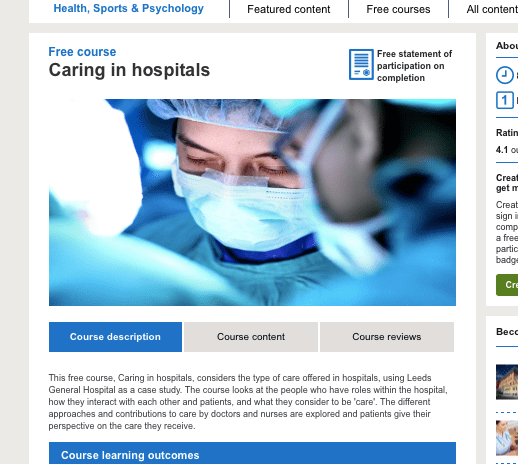
The next one I wanted to look into from the document was caring in hospitals. When clicking on the link it directed me to a online course however I thought I could take notes from this . I feel as if the agenda for this is to make people care more in hospital and educate people. The NHS do not have a lot of staff and providing online courses and potentially enable people to want to part of the NHS whatever shape or form. It educates people what its like to be in a hospital and the aspects the staff have to take and you would have to take if you wanted to join/
Who has to pay for the NHS and when?
The final one I looked into (that I took notes on) was one about paying. I chose this because Tom in our group mentioned about immigrants having the pay for certain treatments because they are not a citizen and he had experience that therefore I wanted to understand it. Some things should not be paid for by the NHS that’s something I agree on however the argument here is where do you draw the line .
It will soon cost migrants from outside the EU £400 a year to access the National Health Service in Britain, after the government announced plans to double the fee from £200.
The NHS has long been a bastion of universal healthcare in Britain. It was established in 1948 with the ambition of providing healthcare, free at the point of service, for “everyone – rich, or poor, man, woman or child” to “relieve your money worries in times of illness”. In recent years, however, charges, increasing restrictions and complex guidance makes it difficult to know who has to pay for the NHS and when.
Historically, eligibility for free care was based on a person being “ordinarily resident in the UK”. This meant that if you moved to the UK to live and work, or you came to study, you would be entitled to free NHS care. A series of amendments to NHS regulations, starting in the 2000s, excluded a number of vulnerable groups from being eligible for free healthcare, including failed asylum seekers, undocumented migrants and those who had overstayed their visa.
taken from: http://theconversation.com/who-has-to-pay-for-the-nhs-and-when-91344
I think the agenda through this article is to make aware to people what the nHS is for and the main purpose of it making it aware to the public of what to pay for and what not to pay for and the issues faced within immigrants etc.
I also watched the videos and undertook notes here.
 ktwilliamsdesigns4BA