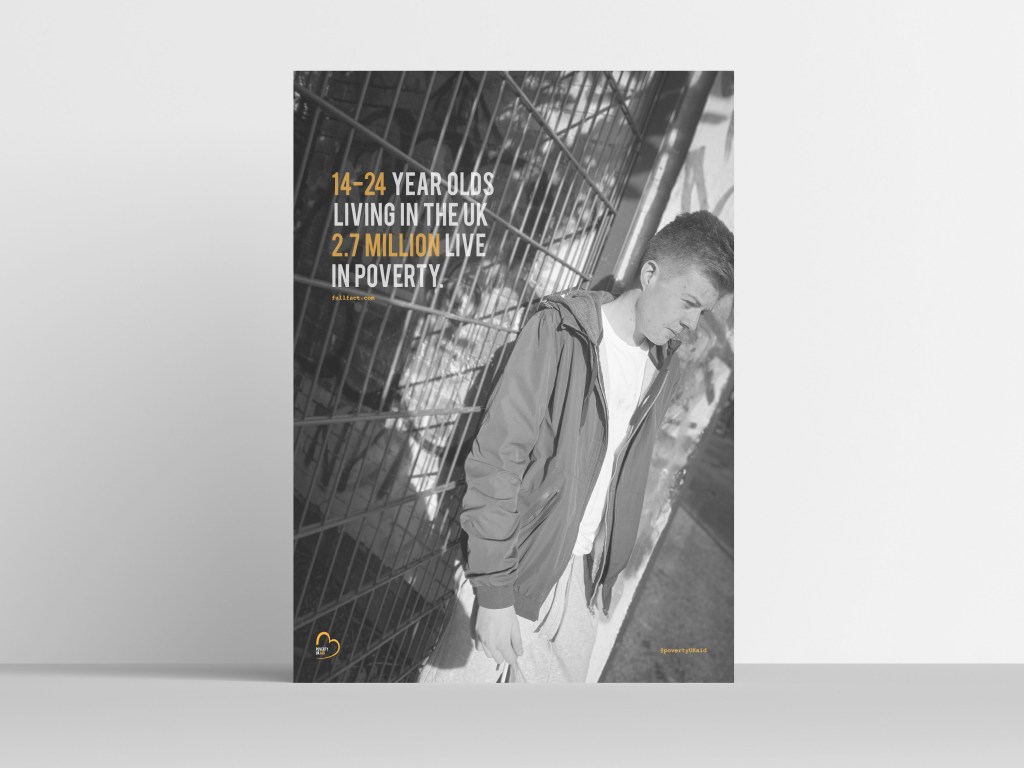
One thing to discuss through the design process was the alternations for the posters once printed. Not everything had to be changed but one poster in particular needed to be altered due to the wording. Within each poster there is a fact, this fact has been taken from full fact . com which has been displayed on posters and in the magazine as a reliable source. When i was printing this final indicated below, I was sure this was the final design; however after reviewing it once printing the type just made no sense to me.
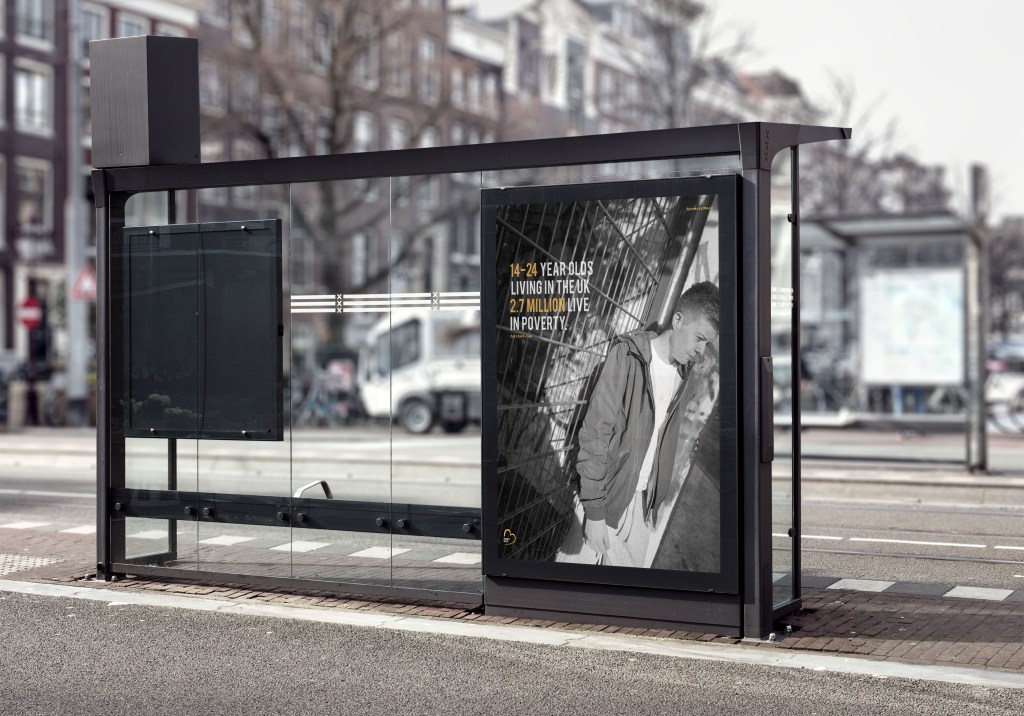
Within the mock up the statement used is ’14-24′ year olds living in the Uk,2.7 million live in poverty. for me this made absolutely no sense there needed to be a use of punctuation or rephrase the entire sentence. I then decided to ask my tutor what she thought and we came up with a new phrase to use through the design.
“Nearly 3 million 14-24 year olds in the uk LIVE IN POVERTY” This automatically sounded so much better in comparison to the first poster. The purpose of all these designs was to make it stand out to people and be in peoples faces. I wanted the information to stand out to people and really make them think and wonder how they can benefit from helping. I wanted to facts to be shocking and this one defiantly achieves this. I decided to highlight the words 3 million and poverty and these were the key words for me within this design. Comparing this to my first design type you can already see as a reader that it stands out more and hits you a lot harder than previously.
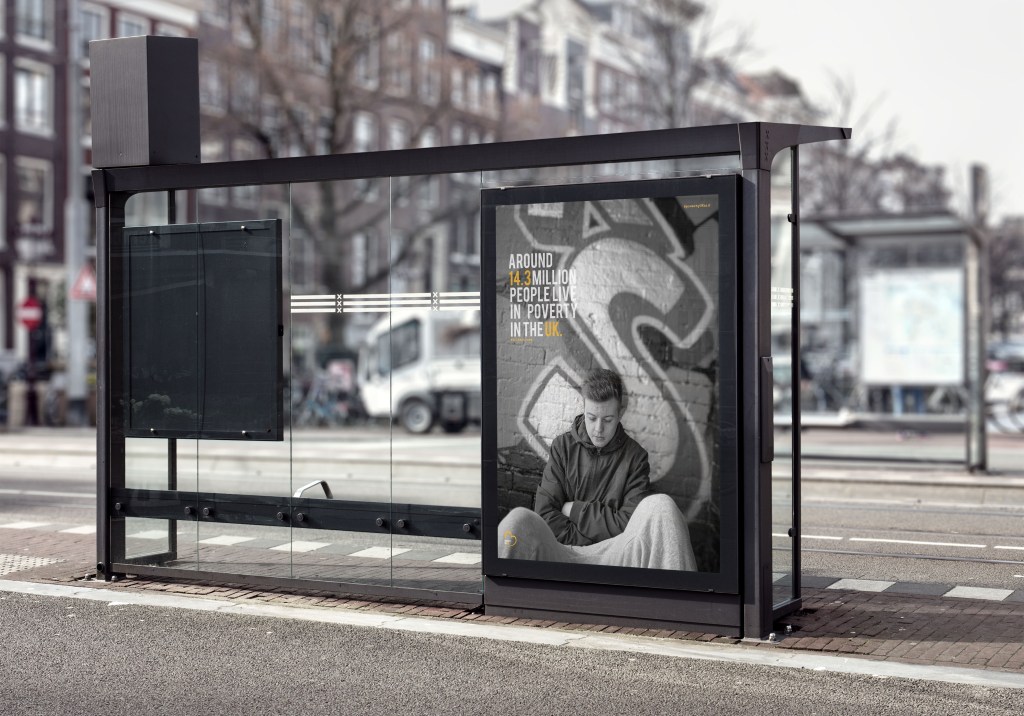
I have always loved billboards, and the idea of these posters created was to be featured in either a billboard on a bus stop, or on the street. For the time being I decided to showcase two of my posters on a billboard so you can understand what the purpose is of these designs.
As the years have progress through my graphic design learning, the main thing that has stuck with me and I will continue as the years go on is design for good. Advertising can be an industry filled of negativity and portraying the wrong message; however personally speaking using a graphic platform to change the world, or design for a goo dppurpose is what graphic design is all about.
I wanted to create this poverty aid campaign, because near Christmas you see more and more families struggling and it made realise how lucky I am. I now live with my boyfriend and his family, but I go home at least once a week… I do not forget what my parents went through when I was little therefore this was a design not only for design for good, but also a design to make my parents realise I do still know what its like.
I think the UK is surrounded by this persona, of being a rich country and having elements of homeless people, there is not a lot out there that describes life of a family, and an individual going through poverty, which is not just living on the street. I want to enable people who have it all the help those that do not; we are turning into a very selfish country and that’s not what I am about, and design for good has taught me a way to help others through my designs.
The main purpose through my design process for this project was to portray poverty in a sensitive like but make people aware that poverty in the UK is a thing and is right under your noses. Poverty is a depressing subject and the designs had to represent that however, I incorporated the colour orange to signify some sort of hope within poverty and then the design. poverty is a extremely sensitive topic therefore within my designs I wanted to showcase this. This being within the photos the colour and the style that was presented.
When you look at poverty cases they are always depressing and sometimes makes you want to walk pass it and not bother taking action, therefore it was key for me to have a clean design that portrayed hoped and happiness as well as the depressing side of poverty.
The first two pages have been short with information and did not want to go not a lot of detail within poverty. I did this so the reader would have to read on and want to continue to find out about UK poverty and ways in which they could help. Therefore the next page is “defining poverty” Again all the information is taken from full fact . com and this has been said in the type.
left hand page:
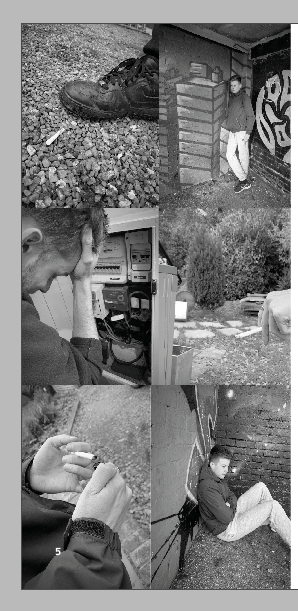
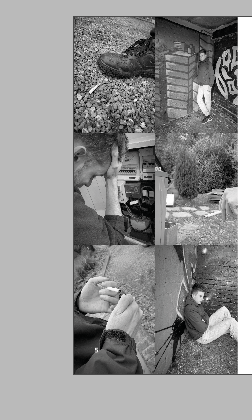
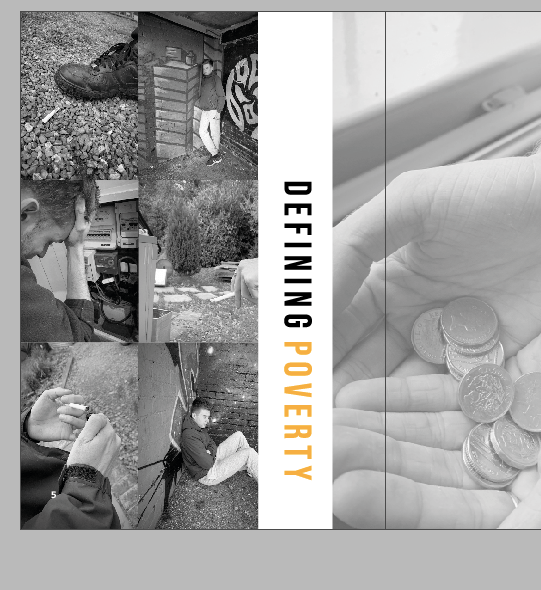
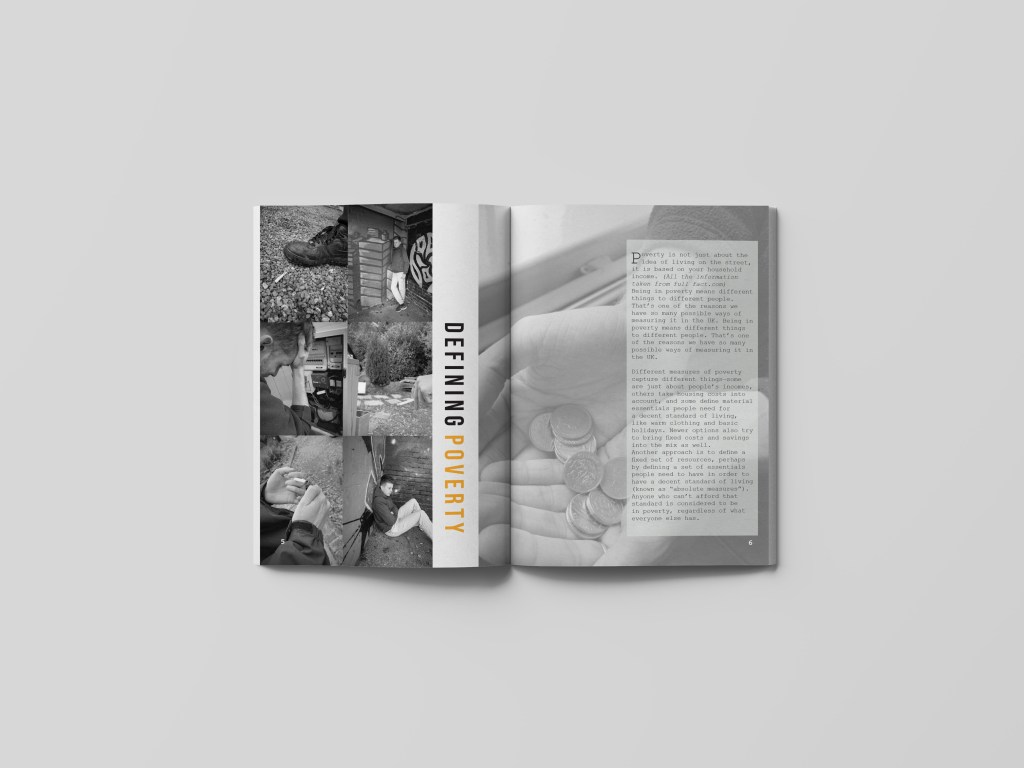
I wanted this page to be slightly different; meaning it would still have all the elements the other pages would have like the orange and black and white colour theme but the layout to be slightly different. This page is all about poverty and defining it therefore was a perfect platform to showcase all the elements that fall on the poverty line. On the left hand side I wanted to display a column of photographs that represented poverty within the UK and try my hardest to show case that well. I used the images that I felt represented the idea of struggling and desperation through photography… as you can see they are all black and white and the theme. At first I was going to make the entire left hand page a collage, but then felt as if it would become too over crowed in comparison to the other pages within the magazine already designed. Therefore, I stuck with the idea of collage but then moved the two columns right over to the left hand side so no gaps were shown, this then allowed me to have a bit of negative space left on the left hand page and follow through to the gutter to allow more images or text to be added. I am not sure if you can notice but when I screens hotted this to add It to my blog, I noticed a white gap that was between the two images which automatically made me change it. I did not change the design just made sure this white gap was gone (however I already did mock ups therefore had to change them also) this made me realise I NEED TO DOUBLE CHECK EVERYTHING!!!!!
this is the updated one without that annoying white space between the two photographs at the bottom just to showcase that. I made them slightly thinner and this then made the white space disappear and no longer annoyed me.
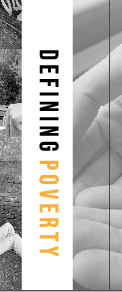
I then thought about making the title slightly different in comparison to the other designs. This page was different already due tot amount of images used so why nit make the type slightly different. I enjoy making posters and editorial visualise that are unique and different and that’s what Made me design this editorial spread like this. The aim was to make this page more about the photographs, therefore I did not want the type to over power that. by making two column collage it enabled me to create negative space between the left hand page and gutter and this then made a perfect space for the title. The type spaced BEBAS is that sort of typeface that can be read from any positioning therefore this made me want to alternative the positioning. With the negative space it worked so well and was readable still. I made the working defining in black and the world poverty in orange to follow the colour scheme that follows through the magazine. I was worried this would not be seen but it breaks of the images from one another creating negative space, and does not make it over crowded giving it that minimising effect.
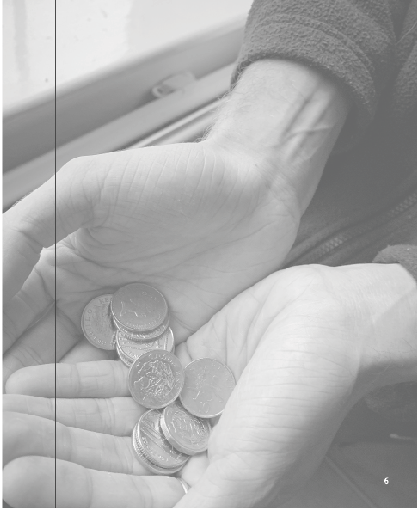
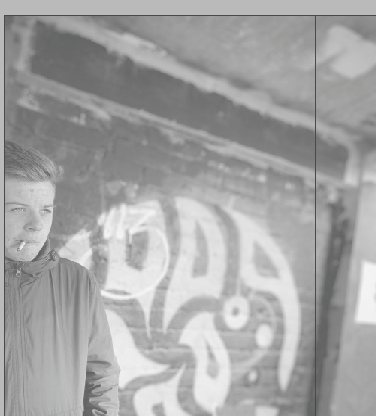
I could of easily left white negative space over the gutter to the next page, but I felt as if this was then separating the two pages and not continuing the story. due to layout of text I thought it would be appropriate to put an image over the gutter next to the text following through to the next page. Within the image below, you can slightly see this image coming over the gutter and links the pages well together.
On the right hand side I wanted the entire page to be filled with an image and then the text to sit over the as this page was all about portraying life in poverty. Out of all the images I had taken one stood out to me the most, and that was the money holding, it represented the idea of living on what you have and not beyond your means therefore thought it was a perfect choice of larger scale image to fill the page. Because, I knew I was going to add type over this image I lowered the opacity to around 70 so the image could still be seen but did not contrast against the writing. I was worried that it would look weird lowered just because the other photos were not but I actually think it worked well and they told different stories but linked together through their meaning.
Adding type:
The type was an issue, but I got there in the end it just took a few stages to end up with it. I wanted all my information to be from the same website and source therefore again it was from full fact.com.
Poverty is not just about the idea of living on the street, it is based on your household income. (All the information taken from full fact.com)
Being in poverty means different things to different people. That’s one of the reasons we have so many possible ways of measuring it in the UK. Being in poverty means different things to different people. That’s one of the reasons we have so many possible ways of measuring it in the UK.
Different measures of poverty capture different things—some are just about people’s incomes, others take housing costs into account, and some define material essentials people need for a decent standard of living, like warm clothing and basic holidays. Newer options also try to bring fixed costs and savings into the mix as well.
Another approach is to define a fixed set of resources, perhaps by defining a set of essentials people need to have in order to have a decent standard of living (known as “absolute measures”). Anyone who can’t afford that standard is considered to be in poverty, regardless of what everyone else has.
SOURCE FULLFACT.COM/POVERTYUK
This was the first attempt of adding type to the page. I really wanted to use a drop cap due to research I had found and to me they make the text stand out so much more so the reader wants to find out more about what you are discussing. I made the type sit in courier and followed a column structure like magazine portray within their designs. However when we had the critique one of the comments was that this was hard to read in the mock up and the editorial design therefore I created a test print to see if that was the case.
test print
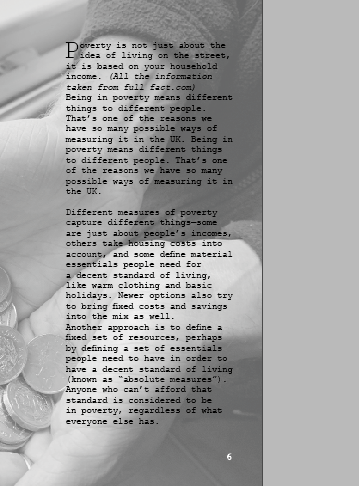
Below is an image on a4 the printed editorial layout on this page. I wanted to see if the writing was hard to read. and it was. I positioned this design in different places and stood away from it then close up to it and it was difficult to read on both aspects. I think it’s because the picture is black and white, and the type is so thin and small they contrast with one another. I showed this to my tutor and she suggested adding a block like some of my other pages and see bow that would look therefore I did just that and thought it worked 100000 times better for the reader to visualise and understand the writing.
I decided to add a lower opacity white block behind the writing – and automatically this made the type stand out and become more easier for the audience to read. I could off easily made it a solid white but then yo would not see elements of the image as much and would clash with the rest of the design.
Final editorial design:
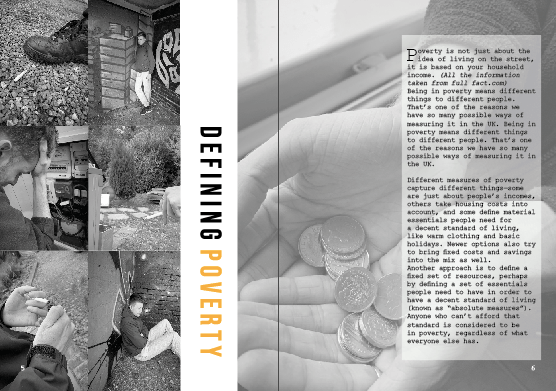
Below is an image if the final editorial design. I think this design works so well with the message I am trying to portray which is poverty in the UK. The photos on the left hand page are an indication of what life is like for the everyday person struggling with the small things some of us take for granted. I think the type in the middle separates the two images but weirdly connects them together well. The page indicates sensitivity to the topic and does not portray any stereotypical images that surround people in poverty. The image on the left also portray more than one person, as I wanted to ensure I was displaying what life is like through a variety of people not just one person, I also think not using the same image twice makes it stand out a lot and not a relative element going on in the design.
Mock up of design
Like all the pages I wanted to create a ,mock up for the audience to see what this would look like when featured in a magazine spread. When looking at this mock up you can see all the key elements well and they all tell a story in their own way but connect well with one another. There is a lot of imagery going on but its not too cramped to the readers eye. Having the image on the right be more lowered in opacity makes the page present more sensitivity towards the topic and not too in your face filled with images. The title works so well when featured in the spread, and this is due to the image on the right going over the gutter allowing the type to be seen well.
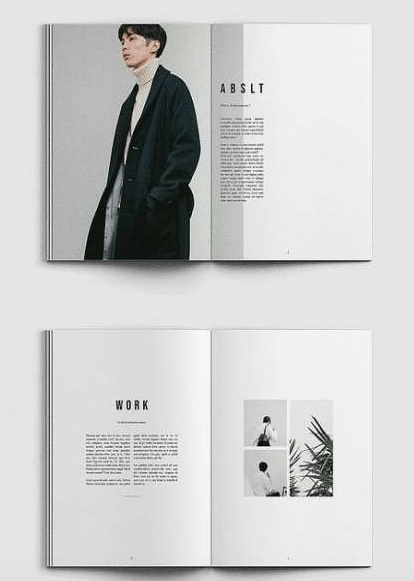
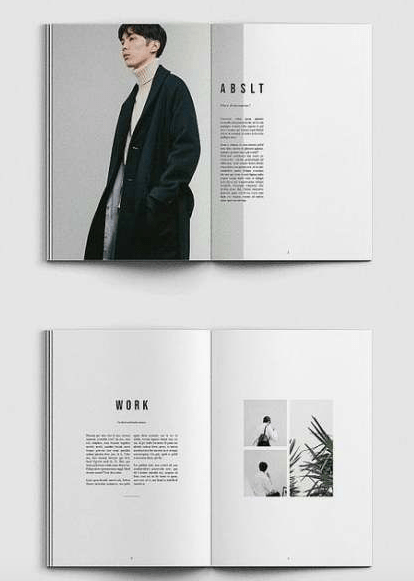
The first editorial page was inspired from the picture below (the top image) and as you can see I tried my best to make it as personal to fit Poverty UK aid as best as it could.
Inspiration:
My design
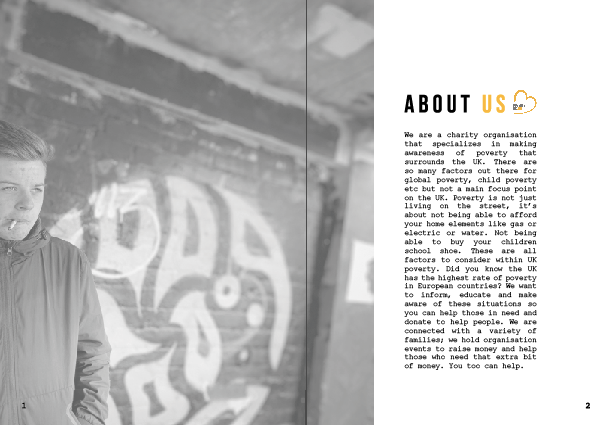
As said in previous posts poverty is a very sensitive topic and portraying it in a sensitive like is key through designs. The first page sets of the design layout for the rest of the pages to make it enhance and create a theme throughout. For the first page, the image used was this one below, but as you can see I lowered the opacity quite a bit to allow the type to be seen but through the changes the type alternates; however the opacity feel gives it quite a subtle look and not too in the audiences face. Just like the inspiration pages; I decided to make the image sit on the left hand side and slightly go over the gutter to the next page, what’s great about this layout technique it makes both the double pages come together and tell a story, rather than being two separate pages against one another.
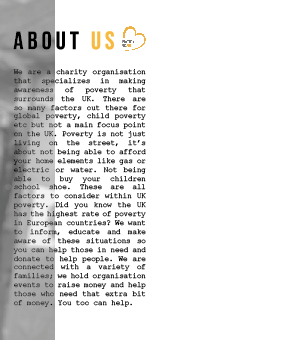
At first this is where I placed the type; however this now has been altered. This page is all about indicating to the audience what Poverty UK aid do as a collective. Therefore the title for this page is ‘about us’. Now unlike the posters this type is slightly different, if you look closely there is space between the letters which was inspired by the magazine on Pinterest. I think it allows the title to be read clearly and not make the page too cramped allowing room for negative space within the design.
I wanted to add the logo within the ‘about us’ title so the audience are clear who we are and what we do, this logo than links the posters with the editorial pages. I decided to make the ‘about’ in black and then the ‘us’ in orange to portray both the colours that feature within the logo and would be used throughout the design.
Below the title sits the type that informs the audience about what we do as a collective. At first, I followed the inspiration from the photo from Pinterest and overplayed the writing against the image, which made me lower the opacity of the picture. However when then doing the critique, a comment made was would this readable to the eye when printed. I think if the photo was not black and white then maybe we could see it more, however there is a lot of negative space on the page therefore I decided to change it and create a test print to secure the design layout choice.
about us’
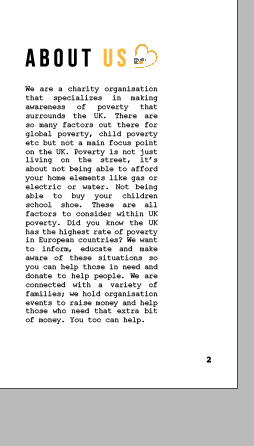
We are a charity organisation that specializes in making awareness of poverty that surrounds the UK. There are so many factors out there for global poverty, child poverty etc but not a main focus point on the UK. Poverty is not just living on the street, it’s about not being able to afford your home elements like gas or electric or water. Not being able to buy your children school shoe. These are all factors to consider within UK poverty. Did you know the UK has the highest rate of poverty in European countries? We want to inform, educate and make aware of these situations so you can help those in need and donate to help people. We are connected with a variety of families; we hold organisation events to raise money and help those who need that extra bit of money. You too can help.
Above is what I have displayed in the about us section its short and sweet and allows people to understand what we do as a hole. As you can see the type sits in courier 10, which is the same as the posters, (where the key information was placed). I feel as if this type works so well with short sentences and articles within editorial design it portrays the type writer effect making it quite quirky and unique.
The changes made:
As previously mentioned after have a critique I decided to alternative the layout of the writing due to the image, and the amount of negative space used within the design. I kept the image to a lowered opacity, because to me when it was a full 100% the image seemed to bold and in your face which is not what I wanted to present through my designs. I decided to move the type slightly to the right into the negative space. I think the reason I did not do this in the first place was 1 because of the inspiration and 2 because I did not want the pages to be separate design elements, however because the image falls through to the next page it concludes the design together nicely and the image almost acts like a story line for the type.
Adding page numbers:
Within editorial design it is important to add numbers to ensure ti the audience what page is what, and if we had more time I would off created an entire magazine of a front cover and contents page therefore this is when the numbers would be involved. I wanted the numbers to be in the same typeface as the writing other wise there would be way too much type going on. They are not the eye of the design but are important to a magazine design for navigation. I decided to make them quite small and sit within the grid for designing and this allowed them to be position nicely within the design.
Final design:
This is the final design piece. I wanted this page to indicate the design and colour theme through the rest of the magazine and I think it achieves this well. The image is off a low opacity so it does not take over from the rest of the image, and continues through to the next page. I defiantly think the type works better sitting in that negative space, its easier for the audience to read and makes it bold and stand out for them. The design is simple. Yet effective creating a clean cut within the design and thats why I think it works well . If the type was any bigger it would over power the design which isn’t what I wanted. I think when the reader looks at this page they get a sense of sentivity , the image is not too bold and the design is subtle to the eye. I wanted to display within the designs a sense of calm, and I think these designs show that and this is mainly because of the negative space used and layout choice. The information is clear to read, a lot of designs I looked at had a lot fo writing on pages, but this one is easy tread and not too much so the audience does not get bored. I also think the first page is like a sneak peak for the rest of the design, as I did not want to portray too much to the audience on the first page otherwise they would not need to read on.
TEST PRINT
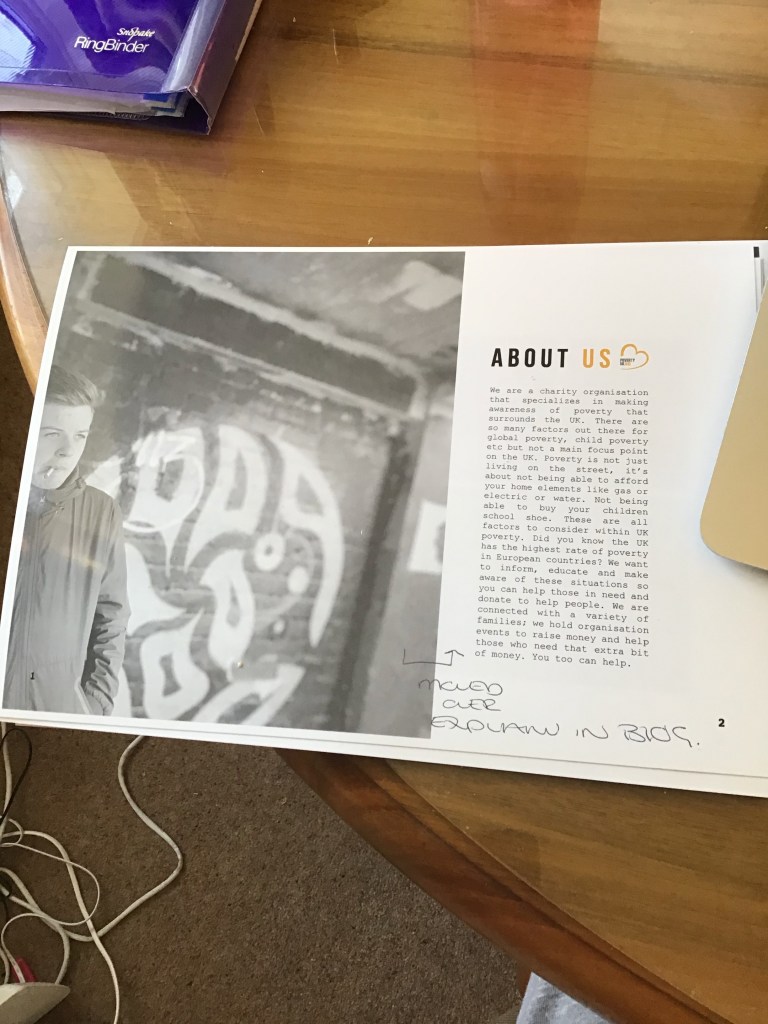
Below is an image of the test print before the mock up was created. This allowed me to understand if the writing was readable to the eye. I do not usually do a test print but this helped me so much to understand what it would appear to the audience when printed.The writing was easy to read, no spelling errors and portrayed the correct message. This is defiantly something I will be doing from now on and wish I had done sooner. Test print saves a lot of editing on screen and panicking.
The final mock up
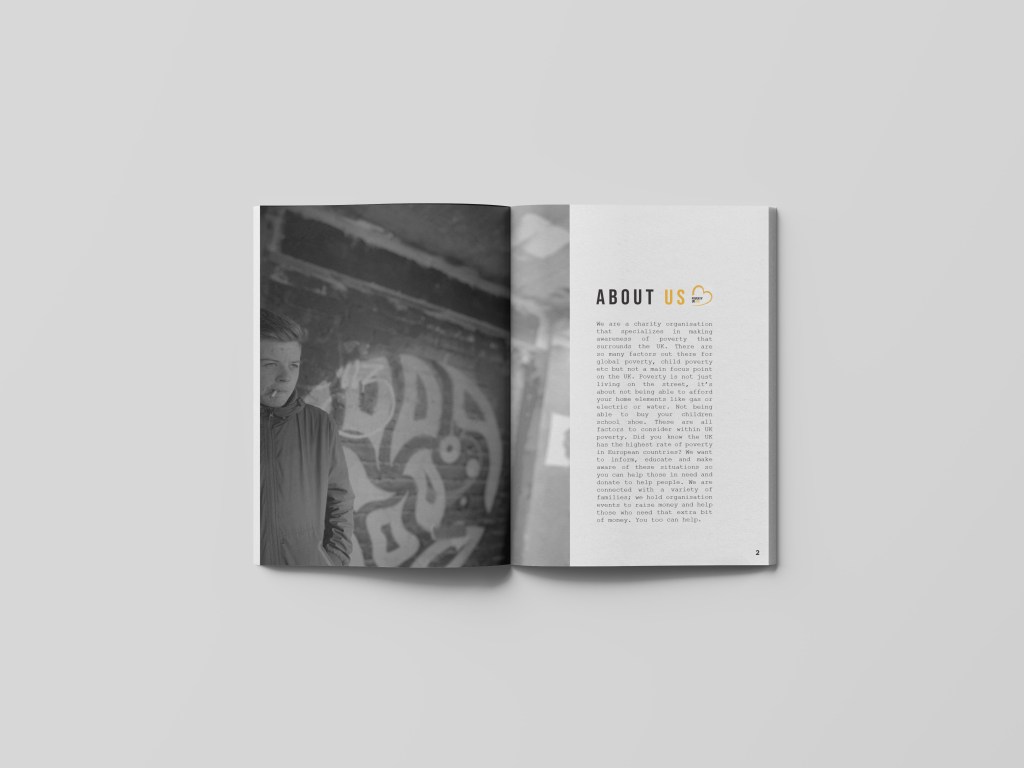
Below is the final mock up. Due to the shadowing the left page seems darker however it is not. The mock up allows me to visualise and the audience what it would be like when printed in a magazine.
Within my magazines, I think I have found a style that relates well with me and relates to the topic, I think I finally found my style and what I love.
I think within magazines should be simple, when they are over crowded the information becomes too much and the reader finds it hard to visualise on one particular thing. I thought that the information would benefit from having a simple design.
Whenever I design a magazine my first place for inspiration is Pinterest. The simplicity of the designs and the way they are so effective makes them stand out to me so much, it creates a unique appearance to them.
My inspiration:
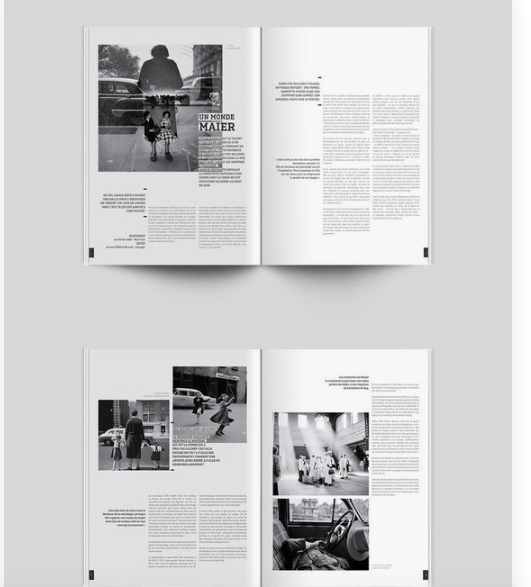
When you look at my first two pages you will understand where the inspiration has come from as they are inspired by these two pages. The first page (top page) in the image inspired me due to the way the image continued over to the next page; then the type sits against this leaving negative space for the type to be read easily. The bottom page interested me because of the layout of the images. I thought that the minimalistic effect works so well with this design and almost grabs the readers attention more than if it was crowded.
I did not use this through my designs but I did use it for referencing to understand how some magazines display images. I chose this one because it used a black and white imagery which I would be using within my magazine, I think when you limit your pictures to black and white you do not have other colours to fall on to create a theme therefore researching into that made me understand how to layout and portray black and white photos against type and layout.
I wanted to make a magazine for this APP as I absolutely love the design features that come along with a magazine. I thought before designing or getting into inspiration towards layout, I would look into existing magazines out there that portray poverty whether this be UK or global.
When you type into google poverty magazine, the majority of things that come up are front covers and this isn’t something I was going to do for my APP; Just editorial pages. Therefore I came across a magazine that was dedicated towards poverty in the UK.
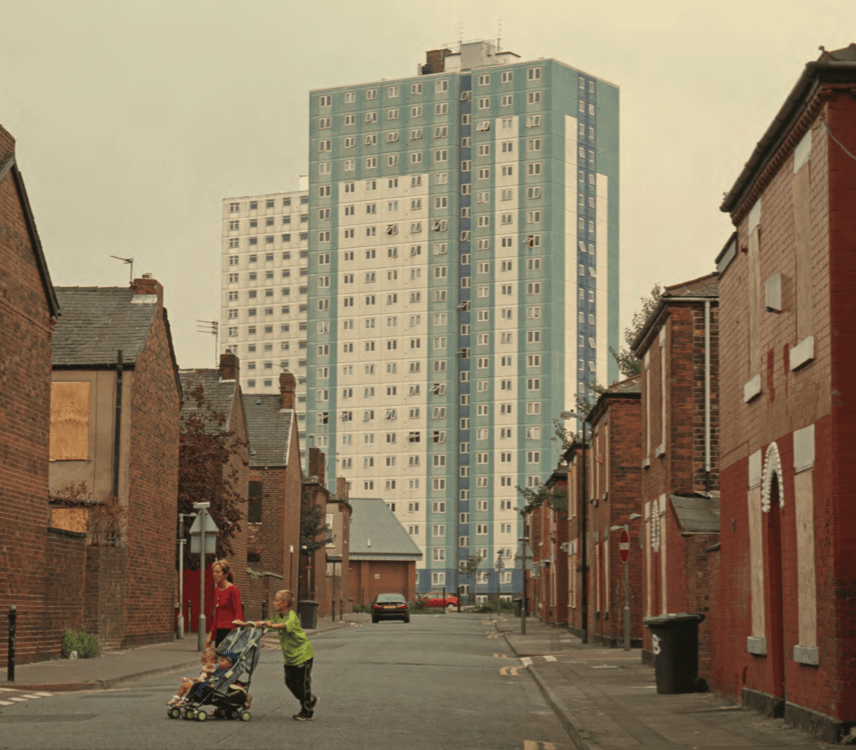
The magazine is prospect magazine … after all the main elements of magazine such as editorial letter etc. This is the first image displayed for UK POVERTY. How stereotypical is this magazine image used? They have a tower block in the background of a narrow street, its almost like they added this tower block there to indicate poverty. On the street is a young mum with 3 kids with the young boy pushing the buggy. This is exactly the opposite of my designs, this is so stereotypical and actually quite offensive, you do not need to live in a tower block to be in poverty.
Articles within the magazine:
They do not use a lot of imagery within the magazine, the majority of it is type which to me doesn’t portray what life is actually like for people in poverty that well. The articles are similar to this one below following the same style, with the two columns the drop cap and the question. I cannot read any of this as it bores me to sleep; there is way to much writing so people zone out they need breaks within the design or some sort of imagery.
All the writing is the same; but what really catches my eye is the images used and how stereotypical this magazine actually has been to me it seems like it’s someone from a higher class that has wrote it and wanted to show case the ‘lower’ way to live almost acting like an inconvenience to them
The photo that shocked me the most was this one below. The angel of this shot is really good, I think it showcases the surroundings well. but again why a tower block? you are giving the impression that if you live on a council estate you are automatically in poverty, which isn’t the case there are families in houses who struggle with poverty. The young boys are behind a bar which to me indicates they are trapped and not free which may be true to poverty issues but aren’t you separating these boys from everyone else? People in poverty aren’t scary people, disgusting people, they are normal people who just need a bit of help. I think the emotions within the children showcase poverty well, I just do not think you need an estate to show that and comes across very stereotypical as this is the second tower block image they have used.
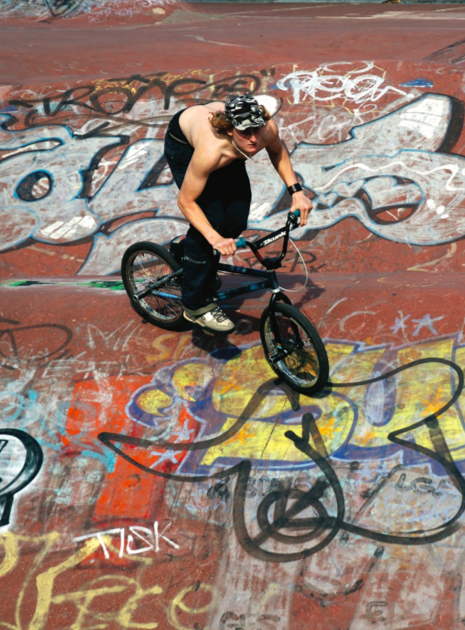
The final image I wanted to discuss was this one below. How on earth is this photo, representing poverty. I understand the graffiti as graffiti displays emotions through art, and something for people to do and the more rough areas do appear graffiti but its peoples way of expressing themselves. A boy riding on a bike? I am not sure how this is poverty at all. its almost like the writer/editor is show casing ‘chavs’ a sort of lifestyle choice not people in poverty.
What I have noticed when looking into poverty magazines is the images tell the story, the type should be short and sweet and not too full on so people who haven’t experience poverty get a chance to understand it. I think the key is making the type sit in black and the titles not becoming too over powering against the images.
I could not find a lot of magazines out there that were based on poverty, they were either magazine articles about poverty (which I noticed drop caps were used a lot to grab the readers attention) I then saw that some of the magazines had adverts that slid into them to portray a poverty campaign, I thought I would look into the front covers of the poverty global magazines to get an idea of what sort of imagery and people they represent within this topic. When looking at the front cover of magazines they use the same sort of nationality to portray poverty, and I could not find one online that portrayed just UK poverty. They use a multi cultural family, a women and a baby struggling, its about saving a life within a different country. but what I noticed about this design was the black and white which is what I have achieved with my front cover, therefore was inspired to continue this through the magazine design. It portrays a negative response to the problem which is what I am aiming for within my designs.
Poverty is a sensitive subject. There are a lot of stereotypical aspects that surround it therefore when designing this had to come into consideration. I wanted to design for good and portray helping one another and becoming a community again. I think these posters do not portray a stereo typical family in poverty, it portrays normal people and their day to day life. The colours are very subtle but work well together and an entire colour scheme forms due to this. Majority of the posters out there for poverty are very depressing however they are very stereotypical and thats something I did not want, I wanted every person to relate to it some, how because I bet half of us have had elements of being on the poverty line now and then. I wanted to portray within the photographs that its not about begging for money, living on the street, its about living with considerations through poverty and your daily life.
The audience for my design is everyone. Families who have everything, who do not struggle, people who have been there before and want to help others. poverty is a lonely thing, its a constant struggle and having pride to not ask for help and thats why I wanted to create this project to allow families gather that help.
My designs are simple, they attract the eye and are sensitive to the audience eye and I think the audience would agree. I asked my mum what she thought of my work, as the personal story used within this story is from my mum and dad. When I showed her she cried, she said”you have hit the nail on the head of what its like struggle financially in the UK” and this is what then set me up for the rest of my designs in my magazine.
Poverty is over powered with facts and statistics; I could off put 50 facts per poster, but I chose facts from a reliable source that I felt would work best to the audience. Highlighting the key worlds made it stand out to the audience and almost allow them to want to read more.
When I displayed these posters infant of the class and tutors the response was lovely. The fact that people knew I was designing for good, and being sensitive to the topic without even saying anything suggest that the designs do the job they are meant to do and will be continued over to the magazine design.
For my portfolio I wanted to design elements of editorial, posters which lead to billboard advertising as its the topics I want have a future career in. Therefore once I created the posters and the basic mock ups I wanted to see what a few of them would look like when added into a billboard sense.
This one below symbolises what it would potentially look like when displayed on an advertising board. Posters can be displayed on undergrounds, cities, bus stops etc. I wanted to portray it on a bus stop, to emphasise that people would sit and read it whilst waiting for a bus which essentially is the aim of any bus stop advertising poster. You can see the type clearly, and if you were to zoom in more you’d see the other elements. The main purpose is the type and image then makes you want to move closer to read and find out more. I think the orange against the white within the type works so well, it makes the most important information stand out and grabs the readers attention.
I could not do poster 3 in a billboard as it was landscape but square landscape, it wa impossible to find a mock up that actually fitted it. I then thought that one would more likely be in an underground display as those ones are on a larger scale. The worry for me was that the posters would not be seen from a far due to the black and white, however what I think makes the poster pop is the colour orange through the type and logo, without that I do not think it would work as well. The images are clear and shine light on the fact of poverty in the UK and are clearly seen even when black and white.







 ktwilliamsdesigns4BA