Project X- Divergent thinking – NHS

Project X

Since I started my graphic design course the main thing that we focus on when participating within group work is the idea of using divergent thinking within designs to create outcomes and is a way of thinking outside the box.

Definition of divergent thinking:

Divergent thinking is a thought process or method use to generate creative ideas by exploring many possible solutions. It typical occurs in spontaneous, free flowing, non-linear manner, such that many ideas are generate in an emergency cognitive fashion (random and outside the box)

Helping the NHS divergent thinking:-

  • robotic nursing
  • holographic first aid
  • treasure hunt to find way around the hospital
  • robot doctors
  • touch screen assistance
  • Everyone is born a doctor and knows basic understanding
  • drowns that can drop medicine to your door

Project X – deciding on a topic as a group

Project X

After we did our research individually we came back together as a group to undertake the outcomes we wanted to achieve and the topic we wanted to focus on. All the topics we individually investigated almost led to the focal point of patient wait time, which linked to visiting the hospital and this was where we wanted to aim towards.

OUR IDEA: PROPOSAL

We are creating a ‘card pairing flow chart’ where the audience creates their ideal hospital plan where they move the rooms to what they consider the layout should be like, and how much time each patient would roughly need to be attended and spend in that department.
We are laying a floor plan made puzzle-like so the audience can rearrange it the way they see fit. 
Some rooms can be blank and filled with waiting area or they can be extended accordingly.
But every choice has a set back and consequence.
We will have tag with the name of each department and a few extras with the time set to choose how long they will spend there.
Each tag will be colour coded with the importance of the department, to help guide the patient to make the correct decision. 
—————————————
NOTES
We could have all of the room colour coded and tell them they can only choose a certain amount in that certain category, so they can decide which one is the most important.

What we need:
– All of the most important departments – Hospital floor plan (empty), like a puzzle.- An introduction paragraph.- Small Feedback sheet.- Important facts or FYIs.- Decision on materials.- Schedule- List of set backs and consequences.- Choose roles of each person.

Project X – different ways of thinking

Project X

Critical thinking – Critical thinking is the analysis of facts to form a judgment. The subject is complex, and several different definitions exist, which generally include the rational, skeptical, unbiased analysis, or evaluation of factual evidence

divergent thinking – Divergent thinking is a thought process or method used to generate creative ideas by exploring many possible solutions. It typically occurs in a spontaneous, free-flowing, “non-linear” manner, such that many ideas are generated in an emergent cognitive fashion.

convergent thinking – Convergent thinking is a term coined by Joy Paul Guilford as the opposite of divergent thinking. It generally means the ability to give the “correct” answer to standard questions that do not require significant creativity, for instance in most tasks in school and on standardized multiple-choice tests for intelligence.

Whenever we do project X we always consider different ways of thinking within the process to understand different ways of designing for good. There fore within this entire project I we had to use alternative ways of thinking such as critical thinking, divergent thinking and convergent thinking.

Project X – Issue links – few analysed

Project X

On Moodle there was a bunch of different tasks to undertake through this process through this blog I will focus on these activities. We had to look at each of these for us as a group to almost collect the ideas we wanted to achieve for the final outcomes and the topic. We kind of already had an idea in our head for the topics we was going to use however I did look into some of these links (not all due to time) I picked some of these that I personally felt were important and wrote notes on them, I did not think of writing notes for all however I did actually look into each specific one.

Changing the NHS

NHS Citizen (people and NHS decision-making) https://www.open.edu/openlearn/people-politics-law/politics-policy-people/participation-now/nhs-citizen

NHS Citizen logoCopyrighted image Icon

“NHS Citizen is a national programme to give the public a say on healthcare matters and influence NHS England decision-making. […] NHS England has commissioned four organisations to manage the NHS Citizen design process: The Tavistock Institute, Involve, The Democratic Society and Public-i. […] All four organisations are responsible for the delivery, engagement and operation of this website and the other project resources we’re developing, but are directly funded by – and answerable to – NHS England.”

It was initiated by governmentdesigners & developersnon-governmental organisation/charity and researchers and encourages people to participate through an online platform, a public assembly and special events. NHS Citizen is national in orientation and concerned with healthdemocracy, politics and representation and participation.

It was launched in 2013 and is ongoing.

Notes from this ^ I think who is making this article is the NHS citizen, and all four of the organisation involved and funded by the NHS. Their agenda is to make awareness and to undertake of the NHS citizen and how its a national in orientation and deals with issues like health, democracy, [politics and representations and participation, educating and informing people about this.

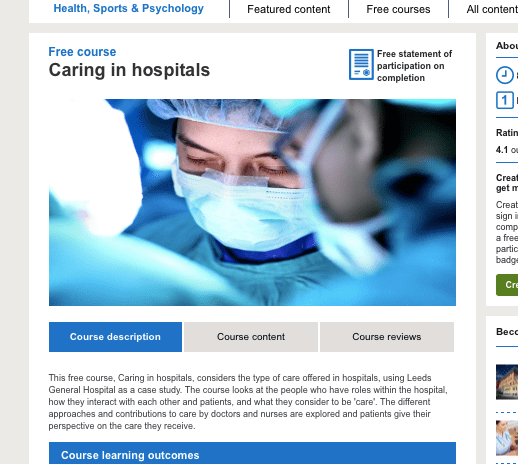
The next one I wanted to look into from the document was caring in hospitals. When clicking on the link it directed me to a online course however I thought I could take notes from this . I feel as if the agenda for this is to make people care more in hospital and educate people. The NHS do not have a lot of staff and providing online courses and potentially enable people to want to part of the NHS whatever shape or form. It educates people what its like to be in a hospital and the aspects the staff have to take and you would have to take if you wanted to join/


Who has to pay for the NHS and when?

The final one I looked into (that I took notes on) was one about paying. I chose this because Tom in our group mentioned about immigrants having the pay for certain treatments because they are not a citizen and he had experience that therefore I wanted to understand it. Some things should not be paid for by the NHS that’s something I agree on however the argument here is where do you draw the line .

It will soon cost migrants from outside the EU £400 a year to access the National Health Service in Britain, after the government announced plans to double the fee from £200.

The NHS has long been a bastion of universal healthcare in Britain. It was established in 1948 with the ambition of providing healthcare, free at the point of service, for “everyone – rich, or poor, man, woman or child” to “relieve your money worries in times of illness”. In recent years, however, charges, increasing restrictions and complex guidance makes it difficult to know who has to pay for the NHS and when.

Historically, eligibility for free care was based on a person being “ordinarily resident in the UK”. This meant that if you moved to the UK to live and work, or you came to study, you would be entitled to free NHS care. A series of amendments to NHS regulations, starting in the 2000s, excluded a number of vulnerable groups from being eligible for free healthcare, including failed asylum seekers, undocumented migrants and those who had overstayed their visa.

taken from: http://theconversation.com/who-has-to-pay-for-the-nhs-and-when-91344

I think the agenda through this article is to make aware to people what the nHS is for and the main purpose of it making it aware to the public of what to pay for and what not to pay for and the issues faced within immigrants etc.

I also watched the videos and undertook notes here.

Creative conscience – picking apart the brief

Creative conscience brief

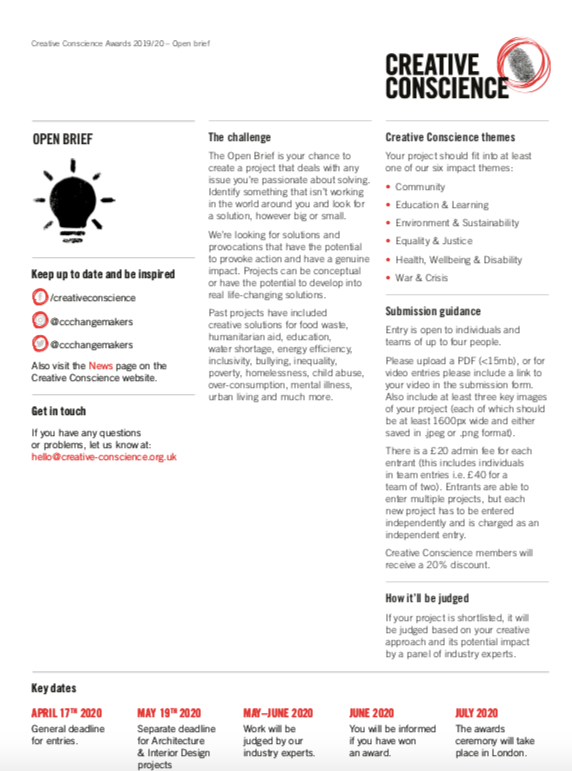
Within the brief, we have to follow each part to make sure we create an outcome that reaches the learning outcomes. Like most project I get the brief and fully analyse it so I know exactly what I need to do to see that goal. I knew I was going to do something that would focus on the open brief therefore meeting these outcomes was important. Not only do I have to make sure I meeting the requirements of the cc brief its also the APP learning outcomes and what they intel.

CC BRIEF / LEARNING OUTCOMES AND PICKING APART THE BRIEF:

The challenge:

The open brief is our chance to a create a project that-deals with any issues we are passionate about solving. Identify something that isn’t working in the world around you and look for a solution. Creative conscience are looking for solutions and provocations that have the potential to prove action and have a genuine impact. Projects can be conceptual or have the potential to develop into real life-changing solutions. e.g food banks, food waste, homelessness, education etc and much more.

Creative conscience themes:

the topic I chose must fit into these themes, community, education and learning, environment and sustainability, equality and justice, health and well-being, and finally war and crisis.

HOW IT HAS DO BE DELIVERED: FOR DEADLINE DAY AND TO CC.

Upload a PDF (bigger than 15mb). Also include at least three key images of your project (each of which should be at least 1600px wide and either saved in jpeg or Png format)

APP LEARNING OUTCOMES:

FOR A HIGH GRADE:

Marks awarded in this category will be awarded for work that is excellent in all aspects, and outstanding in some (lower range), or many (upper range). The work is of exceptional quality and will put forward complex and imaginative ideas in a clear and perceptive argument, deploying a wide range of resources and supporting material with rigour, responsiveness and confidence. The argument is perceptively constructed with precision, displaying critical awareness, and advancing and/or challenging knowledge and understanding, and it is faultlessly presented and communicated.
Marks in this category will be awarded for work that is very good in all aspects, and excellent in many. The work will demonstrate deep knowledge, a secure grasp of complex material, and is intelligently and inventively framed in a coherent, sophisticated argument. It is effectively constructed and eloquently presented. It explores a range of appropriate material beyond that offered on the module, showing an awareness of problems and questions. The presentation is largely faultless.

Works marked higher in this category will demonstrate very good qualities in all aspects, and excellence in some respects. The work will be fully informed, focused along a carefully planned line of argument that demonstrates originality as well as a competent and complex understanding, and displays some independence of analytical thought. It will engage with a comprehensive range of sources, which are effectively synthesized and utilised to put forward conclusions. It communicates clearly, and is presented with care.

Leanring outcomes:

The intended generic learning outcomes and, as appropriate, their relationship to programme learning outcomes

By the end of this module, students will have: 

1.Developed skills of independent study, resource utilisation, problem-solving and decision-taking. 

2. Developed skills of critical thinking, analysis and evaluation.

3. Developed their ability to learn through reflection on practice and experience.

4. Developed their ability to scan and organise data, abstract meaning from information and communicate in oral, written and visual formats. 

5. Developed their ability to work with complex material, analyse problems and identify appropriate solutions.

Brief on Creative conscience:

Despite looking at the APP general brief and the overall brief provided by creative conscience ,the marks through this project are based through the brief provided for us towards the CC. Therefore picking this apart was necessary to achieve higher grades and set goals for my self and indicate what I needed to do to achieve them goals.

Like always I analyse the brief by printing it out and highlighting it at home which is what I did to understand the outcomes for this project already knowing the app brief and the CC brief.

Principal objectives:

  1. To explore visual communication in Design for Good (social design)
  2. To develop skills of designing to communicate complex or contentious information
  3. To engage others in interactive design
  4. To create an entry for a design competition

KEY WORDS ^

-VISUAL COMMUNCIATION

-DESIGN FOR GOOD (SOCIAL DESIGN)

COMMUNICATE COMPLEX OR CONTENTIOUS INFORMATION

ENGAGE

INTERACTIVE DESIGN

DESIGN COMPETITION

Learning outcomes

For each project it’s important to understand the learning outcomes therefore we reach the targets and meet the brief, therefore every project I write down in my blogs the learning outcomes .

The intended subject specific learning outcomes:

  • Demonstrate an understanding of the needs and requirements of professional practice specialism
  • Demonstrate the ability to articulate in various modes of implications pot critical theories for design practices and visual culture in general.
  • Demonstrate skills of effective visual communication through the medium of graphic design specialism.
  • Demonstrate critical research and analyst skills relearnt to contempt practice

The intended generic learning outcomes.

  • Demonstrate skills of indent study, resource utilisation, problem-solving and decision-taking.
  • Demonstrate their ability to leaner through reflection on practice and experience
  • Demonstrate their ability to scan and organise Dara, abstract meaning from information and communication knowledge in a variety of formats
  • work with complex material, analyse problems,ms and identify appropriate solutions

Project X – picking themes within the NHS

Project X

When we returned after christmas we were put into groups. I was with Sam, Tom and Jacob. When we got put in the groups we decided as a collective to understand exactly what sub topic we was going to achieve.

We created a mind map at first on large pieces of paper that allowed us to collect all our ideas together. Tom suggested immigration , I suggested medication prescriptions and sam suggested patent wait time and all this we added on the paper to conclude what we was going to do. On the large pieces of paper we added the different aspects that each of us was going into and develop research further.

My task was looking into medication prescriptions and I also looked more in patient wait time. as I think those linked and would be used well against each other. we all went off to research then we would come back together to develop ideas further.

My research development

Medication waiting time research

During the Christmas period, I research briefly into this topic as well as patient time. I wanted to develop it further and understand it deeply for the project that we was undertaking.

It has been said that ‘The NHS Constitution sets out that patients should wait no longer than 18 weeks from GP referral to treatment.’ which is not always the case due to the issues facing the NHS today.

The growing problem of treatment waiting time…

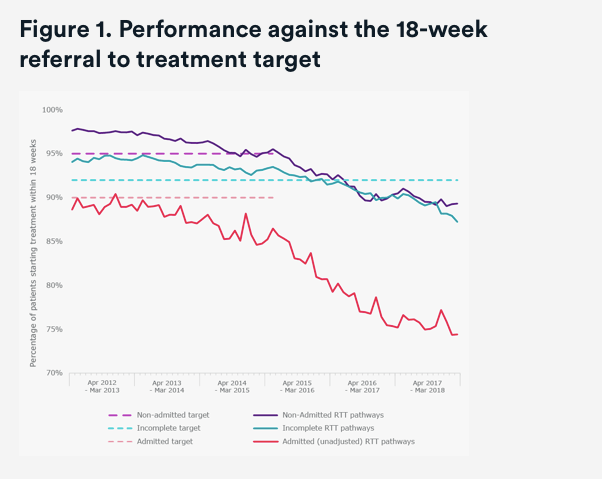
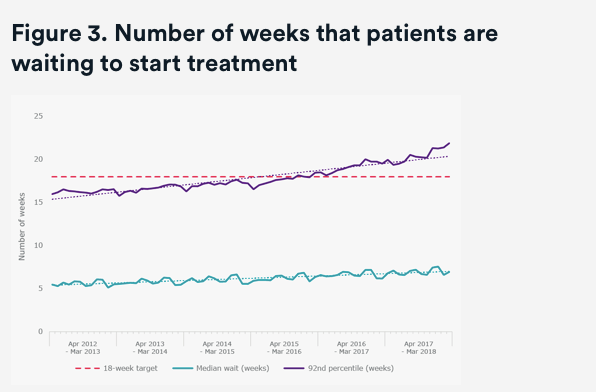
The NHS Constitution sets out that patients have a legal right to “start consultant-led non-emergency treatment within a maximum of 18 weeks of a GP referral”. The operational standard is that the time waited must be 18 weeks or less for at least 92% of patients who are waiting to start treatment (referred to as ‘incomplete pathways’). Performance against this target has worsened over the last couple of years, and the target was last met in February 2016.

In March 2018, only 87% of patients had a treatment waiting time of less than 18 weeks.

There is a reason that waiting times are longer and on this certain website they describe that. I decided to screenshot the diagrams they displayed to make it understanable towards my research.

https://www.nuffieldtrust.org.uk/news-item/the-growing-problem-of-treatment-waiting-times

I do not shout this out to people as its a personal aspect that I do not feel the need to share but due to this topic I wanted to write about it in blog only so please do not share. I have been on anti depressants since I was 17 due to mental health issues. the process I have experienced is disgusting in comparison to other peoples issues. I am meant to have a 6 week consultation every single 6 weeks, I have currently not had one since September due to my doctors not having a spare appointments to see me. I am able to re order my tablets on an app, which I personally feel for anti depressants this should not be a thing. I struggle frequently with my mental health and would never share it with anyone as its my own issue but I personally feel like wait time and prescriptions should be a major priority when focusing on mental health issues.

Patient wait times:

I did look into patient times during the holidays however this was something I wanted to develop further as as a group we already sort of new this was the aspects we were looking into. I looked in personal about a and e waiting times and the overall wait time for the NHS service.

The waiting time target for patients in A&E is currently set to 4 hours from arrival to admission, transfer or discharge. However, not all hospitals have urgent care centres associated, which means people with minor injuries may have a longer wait until they are seen.

From https://www.health.org.uk/news-and-comment/blogs/nhs-performance-and-waiting-times

  • Essential parts of the NHS in England are experiencing the worst performance against waiting times targets since the targets were set. This includes the highest proportion of people waiting more than four hours in A&E departments since 2004, and the highest proportion of people waiting over 18 weeks for non-urgent (but essential) hospital treatment since 2008.
  • The target for treating cancer patients within 62 days of urgent GP referral has not been met for over 5 years, and survey evidence suggests more people are experiencing lengthening delays in getting GP appointments.
  • Longer waits are a symptom of more people needing treatment than the NHS has the capacity to deliver. This reflects a decade of much lower than average funding growth for the NHS and workforce shortages, coupled with growing and changing population health needs. These pressures are exacerbated by cuts to social care and public health budgets, which make it harder to keep people healthy outside hospitals.
  • It will take sustained investment in the NHS and social care to reverse lengthening waits. This will include filling existing staff vacancies and growing the workforce, investment in buildings and equipment, and stabilising the social care sector.
  • If the NHS is to achieve its long-term vision of a service that can prevent ill-health, better manage long-term conditions, and treat people earlier, NHS staff will need time, space and skills to make change at all levels of the health and care system.  

Project X – research over Christmas

Project X

Over the Christmas period the focus for me was my dissertation however when I wanted to step away from this I felt it would be a good idea to research general facts and figures to take into consideration so when we go back in the new year I could provide this to my group. I wanted to research just general facts and figures to understand the overall impact the NHS has one people. I first looked into general facts and I then looked into more of the negative side of the NHS and the issues they face today.

NHS GENERAL FACTS:

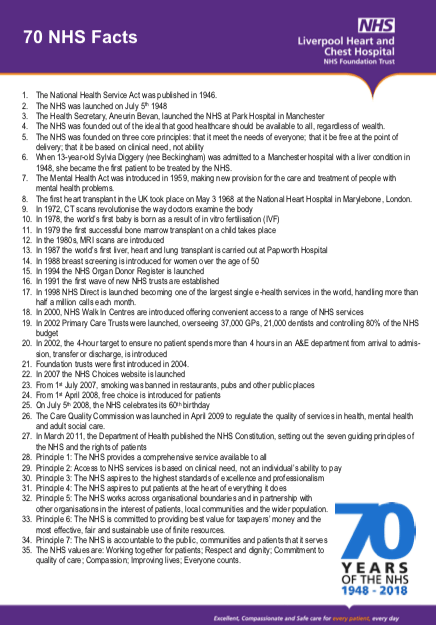
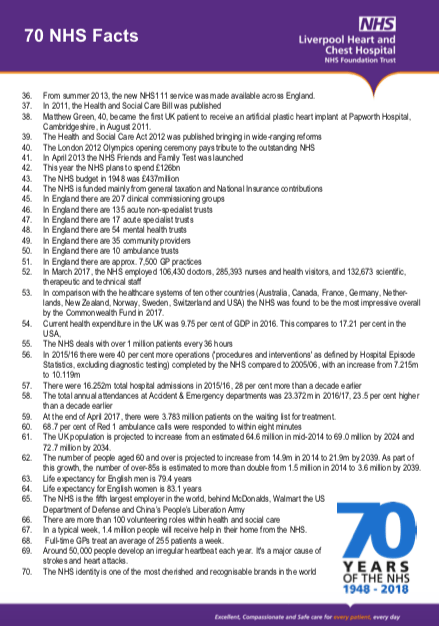
NHS Facts: The NHS is the largest employer in the UK and 5th largest in the world. NHS England is the UK’s biggest employer, closely followed by NHSScotland. The NHS employs a total of approximately 1.5 million people across England, Wales, Scotland and Northern Ireland.

I actually found a PDF that provided so much information about the NHS therefore added it here. Within this PDF it states the history of the NHS, and a variety of facts about the general information surrounding the NHS.

The reason I thought of looking into the negative side is because of experiences I have encountered. I have regular tablets where I have to have them for my well-being. I can never get an appointment for a check up and always have to get new tablets through the app as there are never appointments. My next appointment isn’t until February, whereas I have needed one since September. This led me onto the idea of patient waiting times and the issues surrounding that, which could potentially be an outcome for the group when we go back at Christmas. I then did a bunch of research based on patient waiting times.

The maximum waiting time for non-urgent, consultant-led treatments is 18 weeks from the day your appointment is booked through the NHS e-Referral Service, or when the hospital or service receives your referral letter. However, your right to an 18-week waiting time does not apply if: you choose to wait longer.

Maximum waiting times for non-urgent referrals

The maximum waiting time for non-urgent, consultant-led treatments is 18 weeks from the day your appointment is booked through the NHS e-Referral Service, or when the hospital or service receives your referral letter.

However, your right to an 18-week waiting time does not apply if:

  • you choose to wait longer
  • delaying the start of your treatment is in your best clinical interests, for example, when stopping smoking or losing weight first is likely to improve the outcome of your treatment
  • it is clinically appropriate for your condition to be actively monitored in secondary care without clinical intervention or diagnostic procedures at that stage 
  • you fail to attend appointments that you had chosen from a set of reasonable options
  • the treatment is no longer necessary

Maximum waiting times for urgent cancer referrals

The maximum waiting time for suspected cancer is 2 weeks from the day your appointment is booked through the NHS e-Referral Service, or when the hospital or service receives your referral letter.

Note: Referrals for investigations of breast symptoms, where cancer is not initially suspected, are not urgent referrals for suspected cancer and therefore fall outside the scope of this right.

You have the legal right to ask to be seen or treated by a different provider if you’re likely to wait longer than the maximum waiting time specified for your treatment. 

The hospital or clinical commissioning group (CCG) will have to investigate and offer you a range of suitable alternative hospitals or clinics that would be able to see you sooner. If you’re not happy with the organisation’s response, you can complain by following the NHS complaints procedure.

Compare waiting times

Waiting times may vary between hospitals, and you should consider this when choosing a hospital.

When you’re referred for your first outpatient appointment, the NHS e-Referral Service lets you book the appointment at a hospital or clinic of your choice, on a date and at a time that suits you.

To compare waiting times for hospitals, use the Find hospitals page. Enter the surgical procedure in the procedure box, then the postcode or your preferred location in the location box. 

Note: Waiting times shown are for the specialty or service that the procedure sits under as a whole. For example, if you search for hip replacement, you will find the waiting time for Trauma and Orthopaedic patients at that hospital. 

The length of time you wait will depend on your specific treatment and clinical needs, and you could be seen quicker or wait longer than the waiting time shown.

taken from: https://www.nhs.uk/using-the-nhs/nhs-services/hospitals/guide-to-nhs-waiting-times-in-england/

If you’re referred for a physical or mental health condition, you have the legal right to start non-urgent consultant-led treatment, or be seen by a specialist for suspected cancer, within maximum waiting times.

This right only applies to services commissioned by the NHS in England and does not include public health services commissioned by local authorities, maternity services, or non-consultant-led mental health services.

Find out more about access and waiting times for mental health services.

Your waiting time starts from when the hospital or service receives your referral letter, or when you book your first appointment through the NHS e-Referral Service.

During this time period, you may:

  • have tests, scans or other procedures to help ensure that your treatment is appropriate for your condition
  • have medicine or therapy to manage your symptoms until you start treatment
  • be referred to another consultant or department

Your waiting time ends if a clinician decides no treatment is necessary, if you decide you do not want to be treated, or when your treatment begins.

This could include:

  • being admitted to hospital for an operation or treatment
  • starting treatment that does not require you to stay in hospital, such as taking medicine
  • beginning fitting for a medical device, such as leg braces
  • agreeing to have your condition monitored for a time to see whether you need further treatment
  • receiving advice from hospital staff about how to manage your condition

Tip: Did you know that in most cases you have the legal right to choose the hospital or service you’d like to go to, as well as the clinical team led by a consultant or named healthcare professional? 

For more information, see our guidance on NHS hospital services and accessing mental health service.

Maximum waiting times for non-urgent referrals

The maximum waiting time for non-urgent, consultant-led treatments is 18 weeks from the day your appointment is booked through the NHS e-Referral Service, or when the hospital or service receives your referral letter.

However, your right to an 18-week waiting time does not apply if:

  • you choose to wait longer
  • delaying the start of your treatment is in your best clinical interests, for example, when stopping smoking or losing weight first is likely to improve the outcome of your treatment
  • it is clinically appropriate for your condition to be actively monitored in secondary care without clinical intervention or diagnostic procedures at that stage 
  • you fail to attend appointments that you had chosen from a set of reasonable options
  • the treatment is no longer necessary

Project X picking themes (before Christmas)

Project X

The start of the year means the start of project X. This was the first lesson (which was actually before Christmas) where we decided as a class collectively what overall topic we was going to focus on within the groups. We sat in groups that our tutor had put us in, and this would then enable us to undertake different sort of topics we would want to do as the new year approaches. I was with three people, and my approach was to go around and allow each of them to discuss what they thought was important in the world today. I came up with ocean plastic, the bush fires in Australia, and then someone said about abusing alcohol etc which led to someone saying about the NHS.

We then had to write the chosen two within our groups and write them on the board. we then went one by one to tick the one we was going to go towards.

After everyone voted it was time for us to allow one by one to vote for the best topic we could approach. The winner was NHS. From knowing that the focus would be on the NHS it allowed me to understand exactly what sort of research to undertake within the Christmas holidays. The NHS is a topic that varies over so much and contributes to so many arguments therefore for the holidays I knew I was going to just do general research throughout the NHS.

Final evaluation APP

APP - finals, APP everything

1) Visual Communication:

In what ways does the visual communication/message of the piece meet the needs of the brief?

Within the app project we got advice to create our own proposal therefore within the project, as well as the original brief that comes along side of it. With the main brief, I looked into the word appetite which led onto poverty. Within the brief given to us it allowed us to create work that would fit into our portfolio design aspects. To allow us to open interpretation within the given theme and allow flexibility within chosen pathways. Therefore, we created our own proposals. 

Within my proposal I discussed that I was going to create an advertising campaign within poverty, therefore not discuss what I would create just anything to link with an advertising campaign. Within my campaign, I created posters, and editorial pages that connected with a poverty campaign. As well as the actual finals, the main visual communication that portrays my design as an advertisement campaign is the logo that features within the design. 

In what ways does the visual communication/message of the piece fail to meet the needs of the brief?

Personally speaking, because I had the chance to write my own brief it was easier for me to meet needs of the brief. In the past sometimes it has been harder because you have to follow a certain brief which sometimes limits you. However, this time round just like FMP, I had a clear visualisation in my head what the outcome was going to be therefore I feel as in comparisons to other projects it had a higher level of achievement towards reaching visual communication because I knew exactly what I wanted to achieve.  *****

What are the strengths of the visual communication? Why?

Within the designs, and from the feedback from the crits, the strong point within the visual communication was the sensitivity that came along with the process; each design portrays a black and white photograph which portrays a sense of depression and loneliest that comes along with living in poverty. I research black and white photography and the effect it has on the eye, and it enables the audience to focus on the subject with each individual photo. I wanted to use a colour against the dull black and white to portray a sense of hope, and this in case was orange. The colours made these designs work so well and really enhance the images.

What are the weaknesses of the visual communication? Why?

explained here ****

In what ways could the piece be mis-read or mis-understood by the audience? Be specific about who the audience is.W

When I was printing my designs. There was one poster that could off been mid read and understood due to the type and this was the case in a few posters. Changing words, highlighting different words and using certain punctuation made the finals posters not be misread and make sense to the reader when looking at the posters.

In what practical ways could the piece be developed or improved?

I achieved what I wanted to within this design, and cerated an advertising campaign for a poverty charity. The only thing to mention is when I printed page 6 of the magazine, I noticed a repeated sentence on this blog and the post about the magazine pages, the updated one is now in the portfolio however in portfolio is the repeated word one. I am able to reprint it but just for examine purposes I wanted to highlight this.

2)Good Design? Evaluation

Please note you are asked to describe and make analysis of your thoughts and actions about the topics below. If you have been able to act upon your considerations of Good Design you should give reasons for your design decisions. If you have not been able to act upon your considerations, nevertheless give reasons for this and reflect upon your thoughts about the actions you would have liked to have taken further. Honest evaluations are required as this reflection is to help you move forward.

In what ways did you consider Designing Backwards or application of Systems Thinking to your project?

In what other ways have you considered the sustainability of your project process and outcomes?

Test prints was something I started doing. I noticed that printing on smaller paper allowed me to see hw the images would print. Previously I would waste so much paper and time as I did not test print them noticed how something was wrong; however this time round I did test prints and this allowed-me to develop ideas and be considered sustainable through my designs.

In what ways have you considered the ethical implications of your project process and outcomes?

With a sensitive topic like this thinking of the ethics was important and something that followed through each design aspect.

In sustainability and ethical terms in what ways was your work in this project an improvement or a backward step for you as a socially conscious designer?

As years go on I think I am becoming more aware of being a sustainable and ethical designer making it socially conscious. I am allowing myself to think more logically and if you compared this to Katie in first year its a massive difference. Graphics is not just about designing on a Mac, it is about the other elements that fall into it such as sustainability and ethics and this is what makes your design process excel more.

What targets can you make at this point for your work in the future as a socially conscious designer?

Develop more towards ethics within design as I think this would develop myself as designer for design for good.

3) Reflection of own working practices:

Be very honest with yourself in this section. Please feel free to approach a member of staff for help finding ways to develop skills.

How was my time keeping?

Considering I had a lot of work to do such as the dissertation etc, I think my time keeping was pretty good. Discussing poverty within my dissertation allowed me to actually analyse through my design. I was able to work through my dissertation then use the APP as a stress realise as I was able to design. I do think I could off achieved blogs better for time keeping as this was difficult when also writing a dissertation.

How was my analysis of the brief?

Like every design brief, we get I analyse it and highlight. This time was slightly different. We got given the brief, then had to pick a certain word/phrase and this allowed us to explore different meanings of these words which led us to a topic and a brief. I then wrote the proposal for my poverty design. Writing my own brief, allowed me to justify what To design and what to write and I found it so much easier but also allowed me to understand how to attack each and every brief given to us.

How was my research?

Through this project I did a lot more in depth research in comparison to other projects in the past. I analyse existing material related to the topic , also looked more into colour and black and white photography which had an impact on the design final. I think I could off researched a lot more at the beginning, I found it quite hard as I was researching for dissertation but sometimes the researched crossed over which helped a lot. An example of this being Dorothy langue Migrant mother design portraying poverty which I mention in dissertation but this also linked with the way poverty is displayed to the eye.

How did I draw conclusions from my research?

Researching allowed me to draw conclusions as it enabled me what a poster for poverty should entail and what information provided. Researching into poverty house hold in general, and facts about the UK was the first key set of information displayed and this then allowed me to understand what I was going to portray within designs. Knowing your topic well, and putting yourself in them persons shoes allows your designs to expand and become more personal.

How did I use research to generate and develop ideas?

researching into designs really helped generate ideas, and also looking into how posters and editorial designs in generalise portrayed. Research towards the design, allowed me To develop the way photos were portrayed, how type was portrayed and overall how the finals were portrayed. I wanted to portray a sensitive meaning through my posters, and without the general research of poverty, designs and anything else linked with the process, I would not achieved the outcome I have today.

How did I use evaluations to help with my ideas generation and development?

When we had the critiques and the class and tutors would evaluate our work it allowed me to develop a lot of my designs. When I first started the critique, the designs are so rushed and not well thought through however compare to the final presentation the development has progressed and I do not think it would have so much if we did not evaluate as a class. I have noticed when analysing my work, when writing the design process this was at the time I noticed spelling errors or design issues as I had to physically sit down and write the way the page was design and how each element formed the design. Evaluation the work when I had time left, allowed me to test print and change things accurately to make sure the design work was up to professional standards.

How did I use experimentation during the project? How can I make this more effective?

I knew I wanted to do photography in comparison to illustration as Its more my strong point. However I sketch a lot, but never to the detail, this project I sketched a lot more design aspects which helped me develop my ideas and develop my techniques even if they were not used int the final outcomes. I also experimented with all different layout forms, all different angels of photography and the black and white theme was an experiment that turned out well. To make my experiment more effective, I will test a few more ideas before concluding to the first one. Sometimes I get an idea and run with it as I get too excited but that’s when things go wrong and a lot of design elements change along the way.. my target for the rest of the projects is to start small, start sketching etc and then start creating on the Mac as this would then not only advance my techniques but also allow me to really refine designs due to the experimentation used throughout the project.

In what ways did I show that I had achieved the Learning Outcomes? How can I improve this next time?

like every project I always read the learning outcomes and make sure I have a clear understanding of them. I made sure I kept referring back to them, however with this project and whenever we have our own brief I find it hard to focus on the learning outcomes as you focus on anything else. As years have gone it I almost know the outcomes of each brief quite well but do feel as if I should pay more attention to them as time goes and projects become harder.

What parts of the project did I enjoy most? Why was this the case?

writing my own brief. I think being able to finally design things that fit into my style and the things I want to link into my portfolio is the best thing. I was able to create magazine editorial designs, and poster designs which is what I have always wanted to achieve within graphic design, and by doing this my layout skills have developed so much. Being able to test myself, and ensure I was designing to bets of my ability was down o the fact I got to choose what I was designing. I loved being able to put my own spin on my designs and over all this was one of my favourite projects ever within graphics HND and BA as it was what I wanted and what I knew best making me so confident in the designs.

What parts of the project did I enjoy least? Why was this the case?

I found blogging this time round harder as said before due to dissertation also. However there was not any part of this project I didn’t enjoy. Overall a fab project to get my teeth into.

At what times did I work best? Why might this be the case? How can I ensure that I work well at al times?

I now live with Jack, and strangely we worked better together. We would work down stairs on the table and have to focus we helped one another but also had time to do it ourselves as we are different workers. I was able to complete my work at university and at home, and felt like thistle round I have more control where ever I was working because I knew what I was going to create at the end. I personally cannot work at university all the time, hearing what other people have done or not done detract me working at home alone or with jack helps me a lot more as no distractions occur.

What areas inspired me? Why was this the case? How could I follow these up?

I knew I always enjoyed design for good, but this project it really stood out so much more. I have a compassionate heart well I like to think and finding a love for design for good and layout designing and mixing them together personally made this project stronger. I was inspired by my parents. I recently moved out of my home, and with my boyfriends family who are more well off than my family, my mum always says do not forget where you come from. And I haven’t. my parents struggle when I was younger because they had me so young, but I always had a holiday and sat visited my house, and I never knew they struggled until this year when we spoke about for the first time. I regret being that horrid teenager bugging for money when I knew they did not have it and one day I can pay it back. I was inspired how far my parents have come and the life they have built as they are so stable and happy now but they did not use to be with money. I wanted to show case to my mum I do remember where I come from and those moments in my life have shaped me who I am today. Poverty is horrible, it breaks my heart. Some people do not realise how lucky they are, I want to be the person who makes a difference through my designs and thats is what inspired me. I also looked into what is so typical with poverty and went against that so weirdly that was a form of inspiration; going against the stereotypical designs.

What areas were challenging or difficult?  Why was this the case?

The hardest areas, was making sure I was not being stero typical within the designs and photographs.There had to be a sensitivity that formed around this topic, which I hope does show now. But when taking photographs you have to be careful because you are describing some peoples lives therefore you do not want it to be a persona attack, I found the key is to act like you are in that situation and how would you feel if someone designed this about your life and then rom this you Ould alter things etc.

How can I go about developing and improving the parts I found difficult?

I think for next time with a topic like this, interview questions would be amazing. I think with any project dedicated towards a personal, sensitive topic having people experience it makes it worst. Not making the stories up, actually experiencing them first hand. This would then enable me to not worry about sensitivity and if the design is stereotypical as I would get that personas opinion.

Do I need to develop certain skills? Do I need these now? Or later?

READ EVERYTHING 500 MORE TIMES THAN YOU ALREADY DO. Check grammar and spelling more within magazine designs.

Any other points?

No:) fab project, and had help when needed it 🙂 enjoyed it a lot.

member ship cards

APP - finals, APP everything

If you look closely on the last page of the magazine, there is an indication of what benefits you the consumer when donating to the company and helping people within poverty. You should want to help anyway but some people do not want to see another ad not doing anything, and them not gaining anything… therefore the membership card.

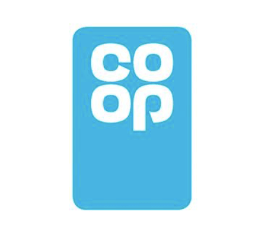
I work in the co-op near my house, and the manager said to me the other day that the co op is expensive what brings people back is the membership cards as they gain points. Thats when a spark went off and I thought about using the co op member ship card as a template to then create one for poverty uk aid so people come back

I simply used the image of the co op member ship card, the one I have and the one thats online and remembered what is portrayed on them at work to then create my own.

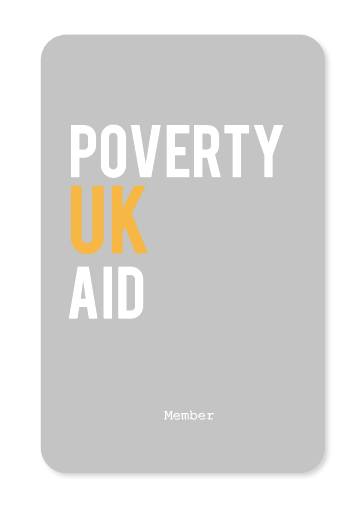
The poverty uk aid member ship card

Below is the final member ship card. The left side is the front and the right is the back. The theme throughout is grey and black and white and orange and this is displayed within the member ship card so people know it’s us. You have poverty uk aid on the front of the member ship card in bold with the member underneath then the logo and the name for the member on the back. It relates to the company, the colours and the designs associating this card with this charity. They can collect points and this is explained in the magazine.