I decided to go towards photography within my designs to enable my message to come through … therefore I wanted to make sure I was analysing photo that was already out there to understand the techniques used within poverty photography.
Already looking at poverty photography the majority of the photos are portraying the most stereotypical idea of poverty. Poverty is known for the less fortunate countries however it happens right here in the (UK) and that’s where my idea sparked from. I wanted to analyse the stereotypical photography to get na understanding on the techniques used within the photographs and then narrow it downforce global poverty to (UK) poverty photographs.
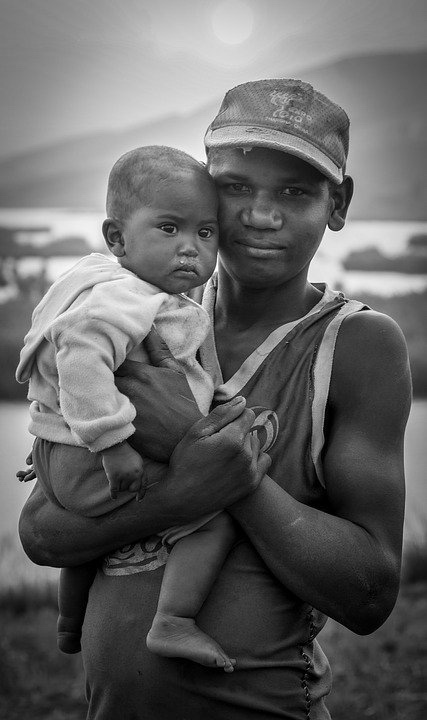
This photograph display poverty using depth of field. The focus of the design is on the two people portrayed – they display poverty by the young boy (who seems quite young) holding a baby – the baby has snot running down their nose indicating the lack of facilities – the baby also has no shoes on indicating poverty and lack of materials. the young boy is half smiling, wearing a hat that is falling apart and a top that seems to be years old as its starting to fall apart. I think what makes the audience connect with this photo is the way in which the older boy is smiling despite the conditions they live in. In the background you can slightly see in the blur the muddy area , indicating a less fortunate town. I think its quite a stereotypical image but it does portray poverty the characters due to their clothes and appearances.
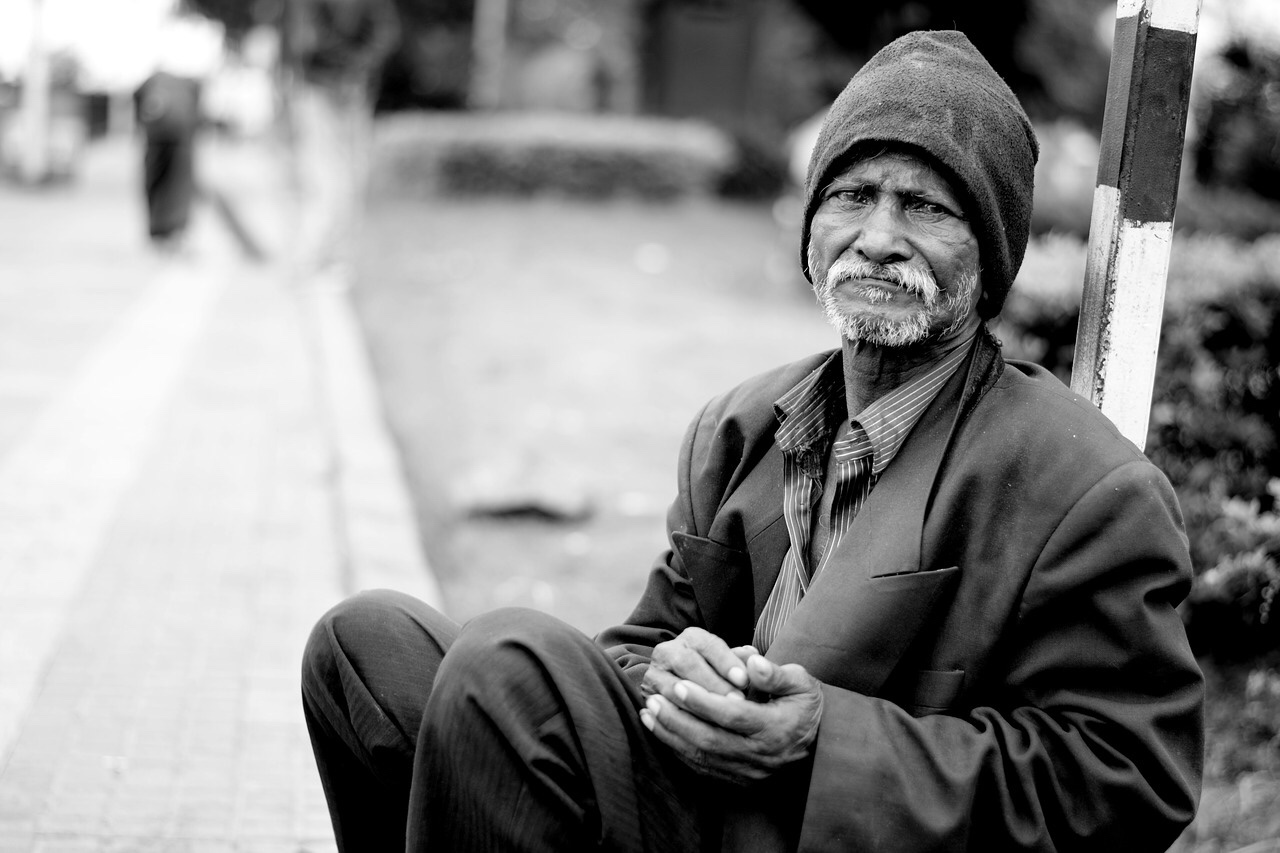
I chose this image to portray the idea of different generations through poverty, and portray the fact that poverty happens through whatever age, and can effect anyone. This photo below displays an elderly man his posture is the main focal point of him being in poverty. his clothes are not muddy but send to be slightly large for him, with a dusty hat. His hands are shaped sort of like when someone is begging for money,. The man is sitting on the edge of the pavement indicating no home or lack our place to stay. Again it sousing depth of field as mentioned and sits in. A lack and white format..,this I’d icates slight depression within 5e photograph and tells more of a story.
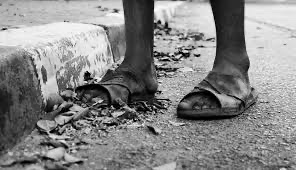
I chose this one because unlike the others it does not focus just on the persons face and appearance. this photo indicates no person but their feet. They are walking along the road (that’s quite messy and not clean) the fact that they are no trainers that they are sandals indicate it’s a hot country, maybe like Africa.. one of his feet is hanging out the shoe making it difficult to keep his foot in place. This shows you can portray poverty in other ways not just the face or person.
photographs (UK)
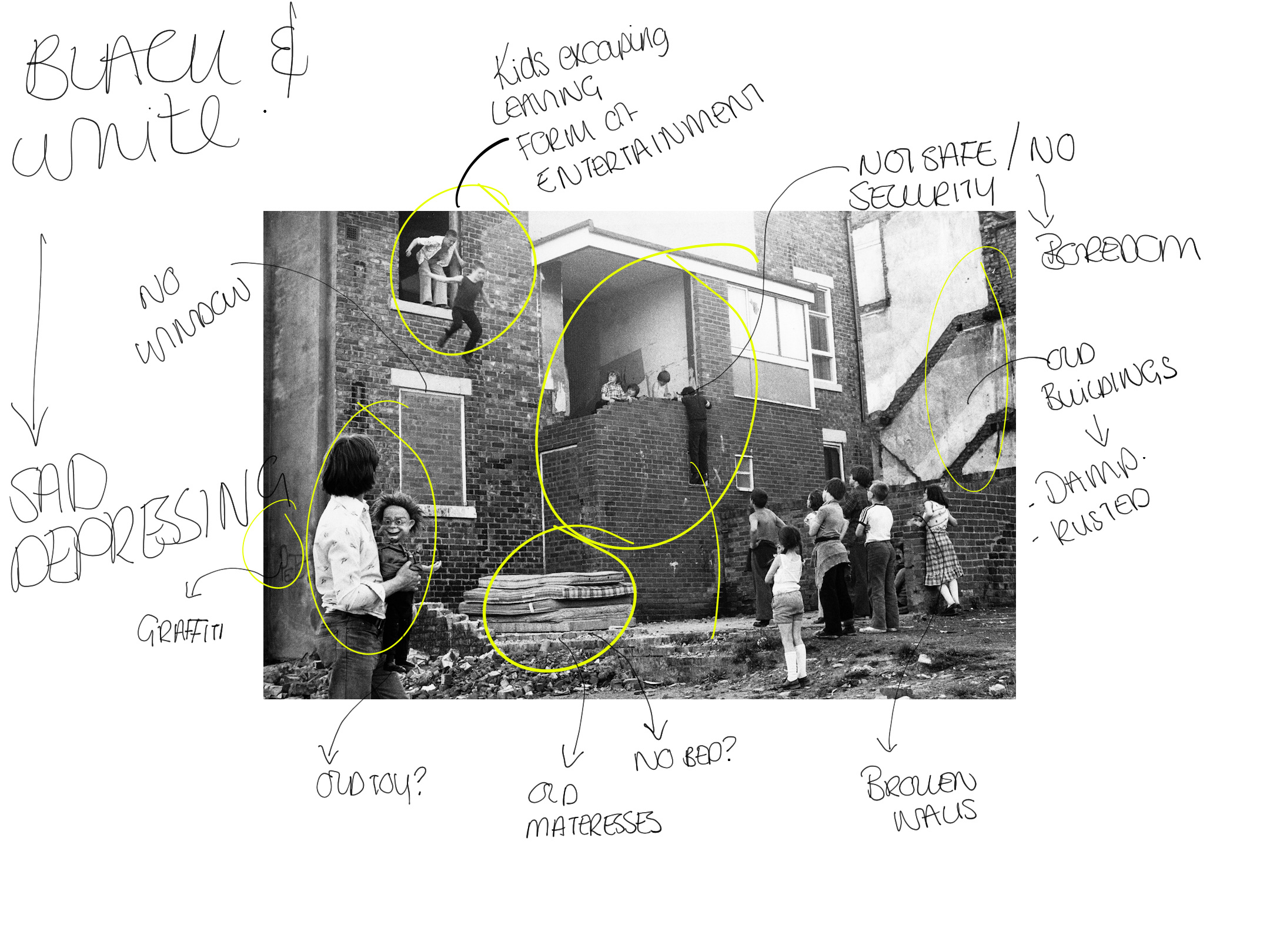
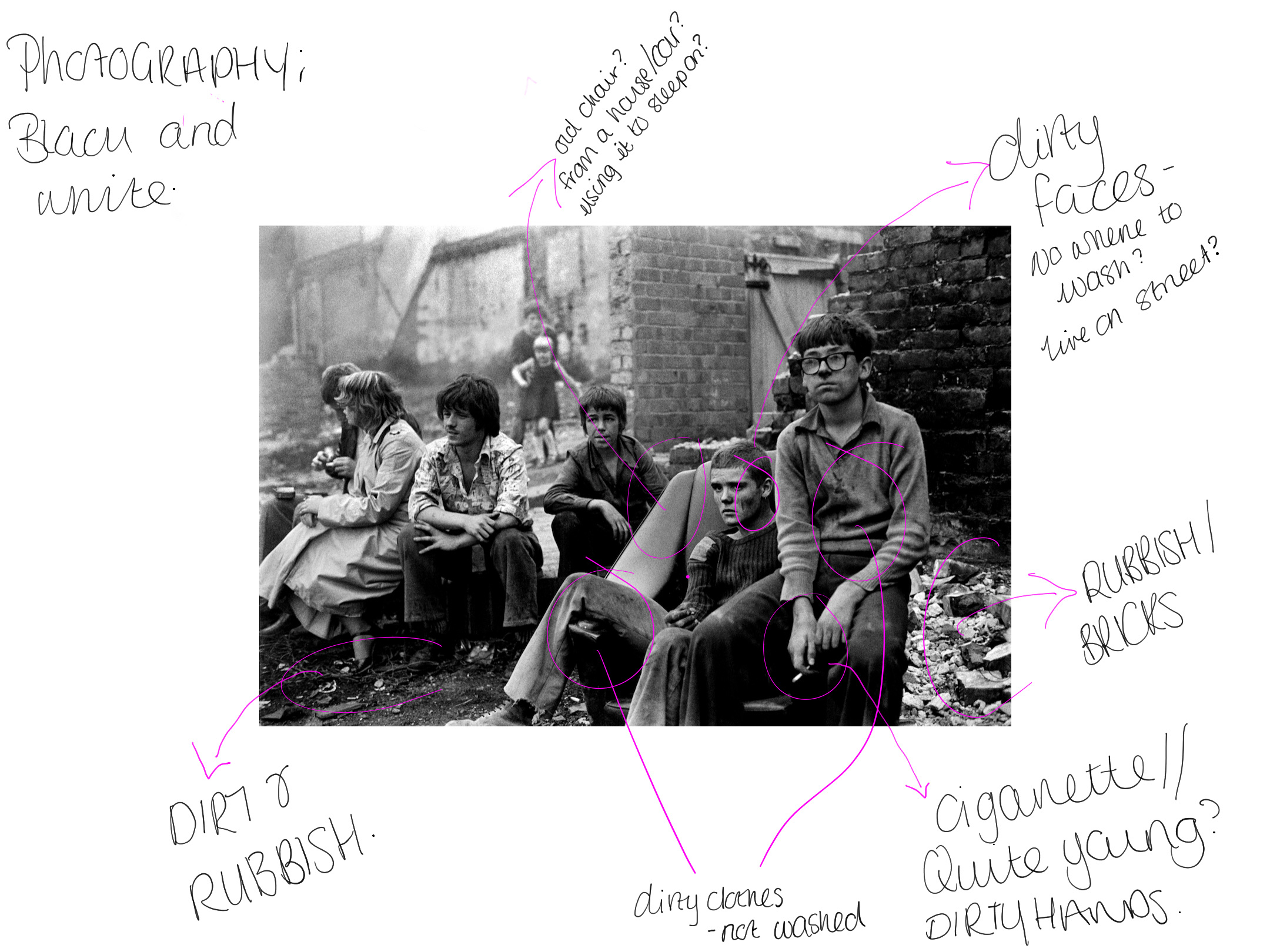
i then decide to focus just on photography poverty based in the uk as these photos do come across slightly different in comparison to the other designs. Some of them are in black and white and others are not therefore I thought I would analyse both and compare them. There actually is not a lot that represent Britain and it’s poverty very well.
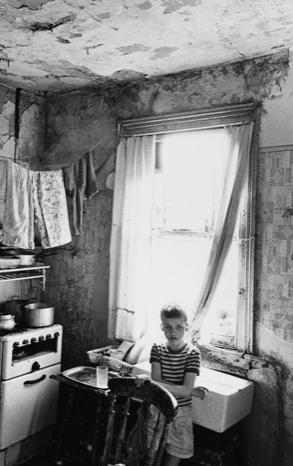
Now when typing into google poverty uk photography I noticed a common ground. These images below are all based in the UK when typing into google. They are all black and white. They all display house hold poverty. They could off easily displayed these photos in non black and white but it would not have the same meaning behind the design. Adding the black and white portrays the idea of alone, isolated and struggling like there is a black cloud always above you. Each one touches you, makes you feel compassion towards people and make you want to help them, they are all normal families and kids and thats what makes these photos so powerful.



I then thought about understanding the effects black and white photography have on the eye. When looking into poverty there was something that stood out to me and that was migrant mother. I am currently writing about this in my dissertation and thought it would fit in so nicely here.
The photograph popularly known as “Migrant Mother” has become an icon of the Great Depression. The compelling image of a mother and her children is actually one of a series of photographs that Dorothea Lange made in February or March of 1936 in Nipomo, California. She captured this horrific time, and making it black and white made it more powerful and told more of a story than if it was in non black and white. You can feel the sadness of the mother, the surrounding being horrific and you feel that from this image, and thats what I think should be portrayed when displaying a sensitive topic such as this.
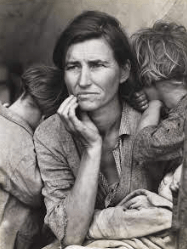
Effects of black and white imagery:
Black-and-white photographs comprise only highlights, shadows, and the shades of gray between. In contrast, each hue in a color photograph adds an element to the image, which can distract viewers from the subject. … As a result, black-and-white is more likely than color to create an abstract visual.
From researching into black and white photography, I thought it would be interesting to see what people say. on one website someone said they they get distracted when the photo is not black and white meaning their focus goes all over the place where as if its just black and white you focus on the one subject the camera has tried to portray. Which explains why a lot of poverty and depressing photography is black and white so people
colour vs black and white
How the pallets affects how we see and feel?
I then found this article above that was so interesting and felt it was appropriate to discuss here.
Black-and-White Photography
Has Reductive Simplicity
There’s a reason so many students learn to photograph (and draw, for that matter) in black-and-white first: a monochromatic palette is simpler, with fewer elements.
- Black-and-white photographs comprise only highlights, shadows, and the shades of gray between. In contrast, each hue in a color photograph adds an element to the image, which can distract viewers from the subject. By reducing an image’s elements with black-and-white, there’s less for photographers—and viewers—to contend with.
- Composition can be seen more readily in a black-and-white image because structure and spatial relationships take precedence. A silhouette, for example, can be particularly powerful in a black-and-white image if it’s clearly separated from other shapes in the composition.
- Similarly, shapes, lines, textures, and contrast within a black-and-white image are prominent. As a result, black-and-white is more likely than color to create an abstract visual.
- The more complete the tonal range, the more dynamic the image. Black-and-white photographs with a deep black, a pure white, and lots of varying grays in between can engage the eyes and draw viewers in
“Black and white is abstract; color is not. Looking at a black-and-white photograph, you are already looking at a strange world.” —Joel Sternfeld
colour:
- Colour plays a huge part in the story the photograph tells. So if color somehow detracts from the main point or subject of an image, the image has lost power. Ideally, the main subject is in a prominent hue while unimportant elements are in a less dominant hue.
- The complexity that color invokes needs to somehow be resolved in an image. To make an image that coalesces, all of the colors need to establish some sort of relationship with each other.
- One way to achieve color harmony is to photograph complementary colors. In the traditional color model of red, yellow, and blue, complementary colors are opposite each other on the color wheel: red and green, yellow and purple, and blue and orange. Pairing them can create a very satisfying visual experience.
Researching more into this made me realise, ow much black and white can effect the emotion through designs and defiantly something to use for ht future of designing for good.


 ktwilliamsdesigns4BA